Health charges would need public support - report

 BBC
BBCHealth charges being developed by the government will not save money or change patient behaviour without public support, a report from the Jersey Audit Office has warned.
The report on sustainable healthcare funding also said there needed to be "wider healthcare and social reform" to ensure public spending delivered value for money.
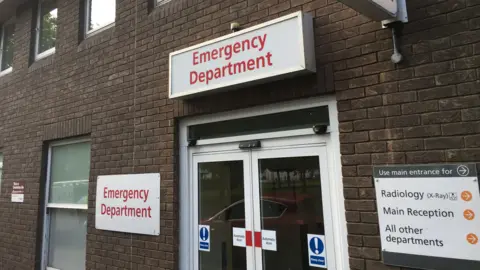
It said the government was considering a "suite" of charges, such as fees for patients who missed hospital appointments or attended the Emergency Department instead of visiting a GP, and that these measures would need to be explained and enforced to drive financial and cultural change.
The BBC has contacted the health minister for a response.
The report outlined funding healthcare was a "signficant financial challenge" for Jersey, which spends a greater percentage of government money on health than any country in the international Organisation for Economic Co-operation and Development (OECD), and the island was set to have a public funding gap for health of nearly £300m by 2043.
Report author Lynn Pamment CBE said: "The risk of ever-rising publicly-funded expenditure on healthcare has been known for a long time.
"It is not an issue that can be resolved by HCJ [Health and Care Jersey Advisory Board] or the government in isolation. The solutions that will be required will need a wider public consensus."
'Weak' enforcement
The report said the charges considered by the government were "not intended to generate significant funding" but were aimed at encouraging better use of health resources.
It said the planned enforcement for Emergency Department fees, a proposal put on hold last year, appeared "weak".
As a result, it said, it could cost more to implement the fees than they would generate.
It also said the minister was considering re-introducing a means-testing system for patients needing travel and off-island accommodation, which could save about £260,000 a year.
Health Minister Senator Tom Binet recently told the Jersey Evening Post patients might face a charge for prescriptions, which have been free since 2008.
He said "people will start having to pay or contribute more for health".
The report has recommend the government explains the reasons for all fees and charges to the public so there was support for them.
'Bed-blocking' law
One of the report's suggestions was for the minister to consider introducing a law to enable the eviction of medically fit people who refused to move from hospital to a suitable care facility.
It follows the introduction of a £500 a day charge for patients refusing hospital discharge, a practice known as "bed blocking".
The report cautioned that charging people for hospital accommodation might not encourage them to move on, but "instead encourage self-funders to stay on the basis they are paying for and receiving a service".

Health campaigner Mary Venturini said funding was an "essential problem" and that it was "absolutely vital" the government got to grips with it.
However, she said that any changes, and particularly any fees introduced, had to have a joined-up approach instead of being piecemeal.
She said: "At the moment, we hear one thing, and then we hear a next thing, and then we hear another thing, and we're all getting very fidgety about this.
"It will need a lot of thinking, it will need good presentation, it will need good communication, and then I think it is possible and that people will accept it; but they won't accept things that are just being fired off minute-by-minute because everybody gets anxious."
Follow BBC Jersey on X and Facebook. Send your story ideas to channel.islands@bbc.co.uk.