'I lost years waiting for endometriosis diagnosis'

 BBC
BBCWomen with endometriosis who have faced agonising delays in diagnosis say new non-invasive testing kits could be life-changing for those living with the painful condition.
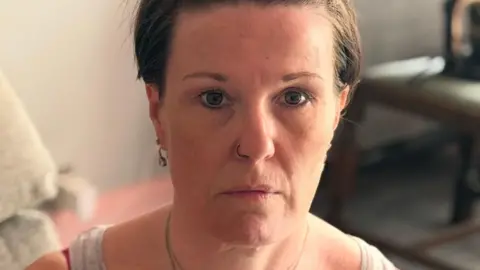
Lee-Ann Hawkes says she "lost all of my 20s and most of my 30s" due to the condition - which affects one in 10 women and people assigned female at birth in the UK - while diagnosis took eight years.
Lara Sharp, who says she waited three years for a diagnosis, says she feels "completely let down" by a health service which "needs more training in women's health".
Endometriosis, which occurs when tissue similar to the lining of the womb grows outside it, can cause severe and debilitating symptoms, such as pelvic pain, heavy periods, fatigue and infertility.
Dr Peter Rabey, Guernsey medical director, says he is sorry some women had felt unheard or unsupported in their journey to diagnosis, adding the States was committed to "strengthening services" so women receive timely assessment, treatment and support.
Health and Social Care in Guernsey says it will consider the suitability of diagnosis kits "as further evidence becomes available".
Hawkes, who works as a personal assistant, suffered with symptoms from endometriosis for more than two decades.
As well as impacting her mental health, she says the pain and bleeding affected her quality of life and her ability to have children.
Now 46, Hawkes says her symptoms began when she was 14, at a time when endometriosis "wasn't well known about".
She recalls her mum helping her into the bath during episodes of severe pain.
"It took about eight years for me to be referred and to be listened to," says Hawkes, who was initially prescribed painkillers and told some women have "heavier periods".
More surgery
Diagnosed at 26, she says she was moved between hospitals in Guernsey and Southampton "two or three times" for surgery, but the symptoms kept returning.
"It was obviously recurring and the only option left to me really was either to leave it and just carry on with it until menopause or have a hysterectomy," she explains.
She says it has changed the course of her life in many ways.
"I was getting pregnant because I badly wanted a child, but I wasn't able to keep the pregnancies," she says.
Aged 38, Hawkes underwent a hysterectomy in Southampton.
This operation found she also had adenomyosis - where the tissue that normally lines the uterus (the endometrium) grows into the muscular uterine wall.
She has since suffered pain from endometriosis on her small intestine, which required more surgery, but says she now - finally - feels she has her life back.
"It has helped my overall health, my mental health," she says
"You know, I'm really active, I'm in a much better place than I ever was. I've got to be thankful for that."
But the impact has been hard.
"All I ever wanted to be was a mother and I don't have that," she adds.
"Really, I lost all of my 20s and most of my 30s."
This month the National Institute for Health and Care Excellence (NICE) released draft guidance recommending new tests be made available on the NHS, aiming to provide quicker diagnosis.
The two non-invasive tests will be offered by GPs in England and Wales during a three-year trial period, while evidence is gathered on the success of the roll-out.
Endotest is a saliva test that looks for genetic material, and Endosure measures electrical signals in the gut using sensor pads on the abdomen.
Hawkes says the test kits sound "amazing" and offer a potential way to avoid the "invasive" exploratory operations she endured.
"That will make life so much easier for a lot of women," she adds.
 Getty
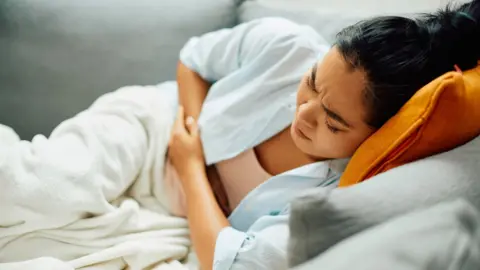
GettyLara Sharp, from Guernsey, says she waited three years for a diagnosis at 30 and she still has "good days and bad days".
"I was shocked when I was going through it how little support and awareness there is," says Sharp, who adds she was looked at by her GP "as though she was over-reacting to a period".
"It made me question myself and I thought 'do I actually know my own body?'," she continues.
A second GP referred Sharp to gynaecology where she was treated with injections, which "lessened her pain", followed by a hysterectomy.
She has since been reflecting on her battle to be "listened to", having been told she was suffering heavy periods, to "take some paracetamol" or "get some rest".
She says it is "insane" that there is "little awareness" of the condition despite the fact one in 10 women live with it.
On the possibility of a new diagnostic kit, Sharp says she would have "jumped at the chance" of using one, adding: "Sometimes you just want to know what the bad news is and then accept the bad news because at least then there are steps to control it or things you can do."
Sharp says she does still struggle with pain and is "battling" with her GP to be referred for more tests.
"I think I've been completely let down. I don't think they understand what they're talking about, some of the doctors. I think they need to be trained more in women's health in general," she adds of Guernsey healthcare.
'Complex condition'
Health and Social Care in Guernsey says the kits are yet to be rolled out in the UK as a review continues and it will "consider their relevance and suitability" for Guernsey "as further evidence becomes available".
Medical director Dr Peter Rabey says the condition is "life-changing" and affects many women in Guernsey.
He also apologies that "some have felt unheard or unsupported during their journey to diagnosis".
"No one should feel that their symptoms are dismissed, and I acknowledge the frustration and distress that long diagnostic delays can cause," he adds.
"Endometriosis is a complex condition that spans both primary and secondary care, and we are committed to strengthening how these services work together so women receive timely assessment, treatment and ongoing support."
Follow BBC Guernsey on X and Facebook and Instagram. Send your story ideas to channel.islands@bbc.co.uk.