Glasgow's colonial history marked by new city trail

 Getty Images
A slavery and colonial trail has been launched in Glasgow, marking the city's role in the transatlantic slave trade.
Glasgow City Council says the new walk will give both residents and visitors to the city a better understanding of its past and colonial legacy.
During the 18th and 19th Centuries, Glasgow merchants amassed significant fortunes through the tobacco, sugar and cotton trades, all of which were closely linked to slave labour.
The city has more than 60 streets and locations with historic connections to slavery – including Buchanan Street – as well as a number of buildings.
Eight figures linked to the trade are also commemorated across monuments in the city.
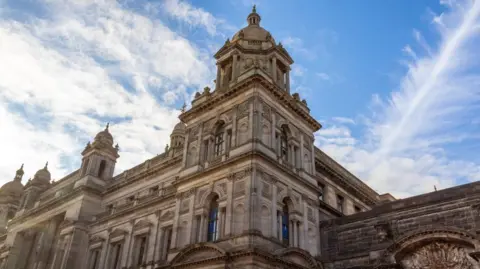
The first phase of the Legacy of Slavery and Colonialism Trail will take in sites including the City Chambers, the Merchant City, Trongate and the Gallery of Modern Art.
The city council say it will show how wealth generated through slavery helped shape Glasgow's growth as a city and many of the institutions in it.
Councillor Susan Aitken, the leader of Glasgow City Council, said the city has a "rich, complex and, at times, deeply uncomfortable" history.
She added: "Many of Glasgow's glories were built on a legacy of slavery and colonialism.
"The consequences of that legacy for the descendants of enslaved and colonised people continue to this day, whether right here in Glasgow or in other parts of the world.
"This trail encourages Glaswegians to look again at familiar streets, buildings and landmarks, to learn more about parts of Glasgow's history that were overlooked for too long and to gain a fuller picture of the people, industries and institutions that helped shape our city."
 Getty Images
In 2022 the council issued an apology on behalf of the city to the descendants of enslaved people and the nations affected.
Glasgow was a major trade route for sugar and tobacco for the slave states of America and the West Indies.
Aitken said many Glaswegians had fought against the slave trade, but there was also those who argued in favour of it.
She stated: "The Glasgow we know today wouldn't exist without the labour of enslaved people and it's time to give them their proper place in our story."
The new trail has been informed by the research of Dr Stephen Mullen, a lecturer in history with a focus on legacies of Atlantic slavery at the University of Glasgow.
It builds on the work of the Coalition for Racial Equality and Rights (CRER), who run Black History Month walking tours in the city.
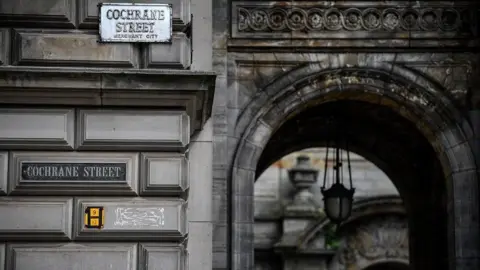
Locations on the trail include Glasgow City Chambers, where 40 Lord Provosts of Glasgow were connected to slavery between 1636 and 1834, Cochrane Street, named in 1787 after prominent tobacco lord Andrew Cochrane, and the City Halls, which served as a key site for anti-slavery meetings and rallies.
The trail will be expanded with information relating to George Square when it reopens later this year.