Geckos released despite big-headed ant attack
 Durrell Wildlife Conservation Trust
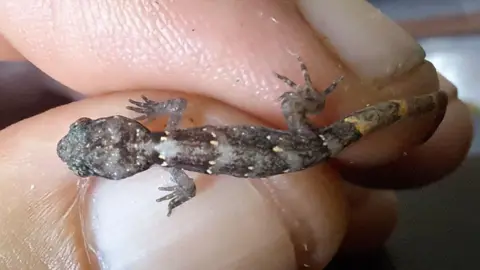
More than 100 gecko eggs have been returned to Mauritius - despite a recent threat to the species by invasive ants.
The African island's lesser night gecko population was affected by an oil spill in 2020, prompting Jersey Zoo to send 142 eggs to help boost numbers.
But project conservationists found further eggs being monitored were being attacked by big-headed ants.
Dr Nik Cole, from Durrell Wildlife Conservation Trust in Jersey, said: "We were surprised to find so many ants attacking the eggs but our quick response meant we were able to save over half of the eggs from Jersey Zoo."
 Durrell Wildlife Conservation Trust
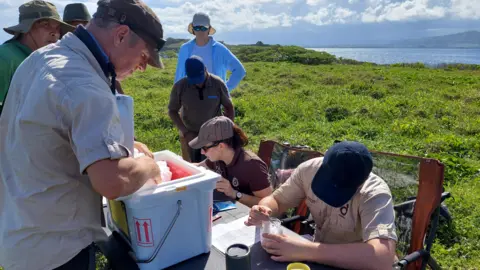
The Mauritius Island Restoration Programme is a partnership between Durrell, the Mauritian Wildlife Foundation and the Government of Mauritius.
Eggs are placed in underground units and monitored every two weeks.
In December, 142 eggs were transported to Mauritius from the Channel Islands zoo but the following month, Durrell noticed the ant invasion.
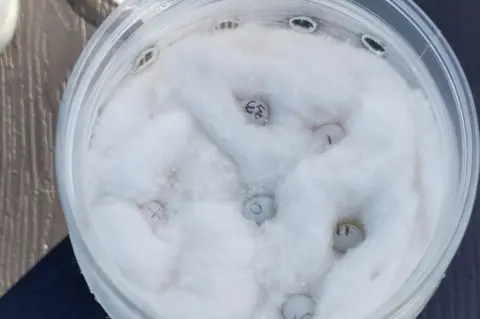
Its intervention saw 91 unhatched eggs sent to the Mauritian Wildlife Foundation to be monitored daily.
 Durrell Wildlife Conservation Trust
As a result, 68 geckos were released on Ilot Vacoas.
Cole said "very few" would have survived if the team had not reacted.
"We pride ourselves at Durrell at being nimble and being able to react quickly to new challenges and improve conservation outcomes, and this is a perfect example of this," he said.
"We now hope to incubate, and hand-release, future eggs, which will ensure the survival of many more geckos."
In 2025, 57 eggs were transported after being laid by geckos at the zoo.
Durrell said the first reintroduction was deemed a huge success and saw 88% of the eggs hatching and rejoining the wild population.
The team plans to transport further eggs from the zoo to Mauritius and said it would adapt the approach to ensure the best chance of survival for the species.
Follow BBC Jersey on X and Facebook. Send your story ideas to channel.islands@bbc.co.uk.