'Delivery from demons' among accounts in clerical child abuse report

 Getty Images
Warning: This story contains distressing details
A woman who said she was violently physically abused while being "delivered from demons" is among dozens of survivors whose experience has been detailed in a long-awaited report into child abuse in Catholic and Protestant faith settings.
The woman said at one time she was beaten so badly she believed her ribs were broken.
The report, called Investigation into Experiences of Victims and Survivors of Historical Clerical Child Abuse, was written by Prof Tim Chapman.
Another woman described the spiritual abuse she endured at the hands of a priest as "soul murder".
Other individuals detailed serious sexual abuse, including the rape of a six-year-old boy.
Survivors have called for a public inquiry into clerical abuse in faith settings.
While previous research examined abuse within residential settings, this report focused on abuse in church congregations and church-run schools and youth organisations.
It was completed in 2025 but only published by the Executive Office on Thursday, along with two other research reports including one on safeguarding measures and one on historical records.
When the reports were publish the first minister and deputy first minister committed to continue to engage with victims and survivors to help shape services and strengthen safeguarding protections in faith settings.
First Minister Michelle O'Neill said she recognised the "tremendous courage" it had taken for those who shared their "deeply painful experiences".
She said the Executive Office was committed to ensuring victims and survivors received the "care, compassion and support they need".
Deputy First Minister Emma Little-Pengelly said it was "vital" to listen to survivors' experiences and to prevent the same from happening again.
She noted the reports acknowledged "significant improvements" in safeguarding arrangements within faith settings, but added there was more that could be done.
"We are committed to working closely with executive colleagues, statutory partners, safeguarding bodies, victims and survivors and faith organisations to ensure that our children and young people are protected now and in the future," she said.
The Northern Ireland Survivor Council said the publication of the reports marked "a significant moment in a long and painful journey, one shaped by the courage, persistence, and dignity of victims and survivors who have carried these truths for decades".
It said it was calling for "a new era of safeguarding reform" that was "built on collaboration, accountability, and shared responsibility".
'Institutional issue'
Chapman's report was based on the oral accounts of 37 survivors - 24 men and 13 women.
Twenty-five of those who took part were from a Catholic Church background, 10 from a Protestant background and two had no current religious affiliation.
The report noted that while public awareness of clerical abuse had been predominantly within the Catholic Church, the research contributed to the growing recognition that clerical abuse was an "institutional issue" across "most religious denominations".
In the case of a woman who was a member of a Protestant church, she described being subjected to "serious sexual advances" by a pastor, who she said was particularly interested in younger girls.
On one occasion, she described how he picked her up in a van and pulled over on a back road in the "pitch black".
"He said, the Bible tells you that you're to present your body as a living sacrifice wholly acceptable to God, which is your reasonable service. I remember he spat the word 'reasonable," she said.
The same woman described how after she resisted his advances, he told her she "had to be taught humility" and was, for "five or six years", made to sit at the back of the church.
She also described how the pastor continued his inappropriate sexual contact with her under the guise of religious ritual - including during prayer in front of the congregation.
The woman described how if she reacted badly, she would be told she had "a spirit of Jezebel".
She also described how the pastor was "very much into demon culture" - or "deliverance, as he called it".
"The slightest thing that you said or done [sic] would lead you to the back room for a deliverance session which was never pleasant. There I was beaten so bad, at one stage, I truly believe I had broken ribs," she said.
'Notable challenges and inconsistencies'
The report noted the serious consequences the pastor's spiritual abuse had on the woman.
It said years later she had a baby who was born 14-weeks premature.
It said the pastor told her God would heal her baby and she should not visit her baby in the hospital.
The report noted the baby later died and that the pastor said it was because the woman's family was cursed.
The account of another Protestant woman referenced how she was also told she was "riddled with demons".
She described on one occasion being taken from bible study, and being kept in a house for hours where she was held down in a chair, while a man and a woman laid their hands on her chest to "cast out" the demons.
Separately, a woman from a Catholic background described how she was subjected to years of grooming by a priest.
The report detailed how she had been abused from within her family, and that years later the priest offered to support her therapeutically.
It said the therapy became a means of controlling the woman and eventually manipulating her into what it described as a "coercive, pseudo-spiritual sexually abusive relationship framed as 'atonement' or 'cleansing'" for the abuse she had endured as a child.
The woman described the experience as "soul murder".
Separately, the report on safeguarding measures said there had been "significant progress" in the development of faith-based organisations' policies, but there were also "notable challenges and inconsistencies".
The research, by Georgina Anderson and Dr Orlan Drummond, found that "structured organisations", particularly with national or regional governance, showed "a strong commitment to safeguarding, with comprehensive policies".
But the authors said "smaller, independent organisations, which operate without any oversight, present a blind spot in the safeguarding landscape".
The report said a statutory agency should be given the authority and resources to audit safeguarding practices and enforce compliance.
It also recommended there should be an official register of faith-based organisations, to help identify independent churches.
The scoping study of historical records recommended that "an appropriate legal structure" should be put in place before there was any other work in the area, and the most effective outcome would be achieved by a statutory inquiry.
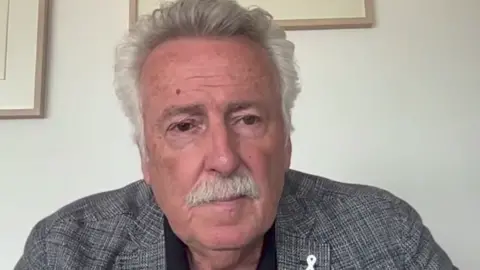
Chapman told BBC News NI he believed some victims would be "very disappointed" by the fact the remarks contained no "clear policy statement" on practical things, including whether there would be money to invest.
He added that it was not for him to comment on whether or not there should be a public inquiry, but said he believed victims should be central to whatever comes next.
"There's a danger that politicians sort of see victims as a threat, where I would love to see victims being recognised asd a resource," he said.
"They know stuff we don't know. They have ideas. And they know how they could have been helped and how future victims could be helped."
Solicitor Claire McKeegan of Phoenix Law, who represents many victims of clerical abuse, said survivors feared the research would become "another exercise in listening without action" if recommendations were not implemented.
"It's clear the overwhelming majority of those abuse survivors who gave testimony want a public inquiry without any further delay," she said.
"This requirement is now underscored by the findings of commissioned experts who have conducted this voluminous research."
If you or anyone you know has been affected by the issues in this article you can find support at BBC Action Line.