Sand lizards reintroduced to fire-damaged ranges

 BBC
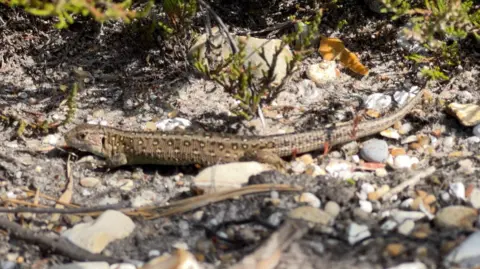
BBCSand lizards have been reintroduced to an area of Surrey heathland previously damaged by wildfire.
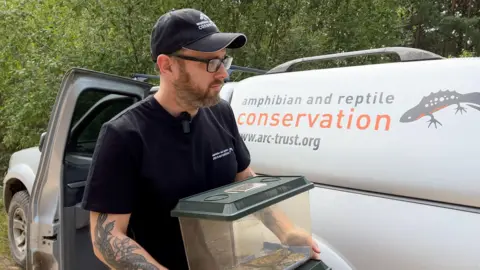
Eight of the reptiles, which were bred in captivity, have been released on the Ash Ranges, west of Pirbright, by Amphibian and Reptile Conservation.
Howard Inns, vice chair of the Dorset-based charity, said that the population had been lost in a northern part of the ranges when fires had hit in 2015.
But he added that he was "surprised" by how well the heathland had recovered since the fires, especially compared to other sites he had seen.
The lizards were rereleased where others had previously been introduced between 1994 and 1998.
And though the warm, dry weather increases the risk of wildfires, it also does help the animals to settle in.
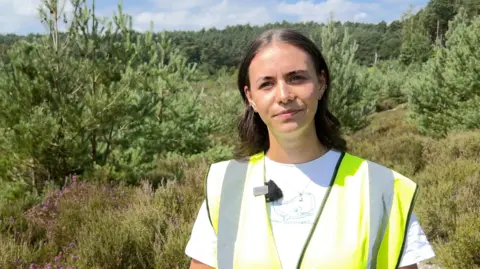
"These are excellent conditions," field worker Adele Dodgson said, adding that the lizards took warmth from their surroundings.
"That will provide the opportunity for the animals to be quite warm and energetic, and move to catch their prey," she added.
According to Surrey Wildlife Trust, the sand lizard is one of the UK's rarest reptiles and it favours sandy heathland habitats and sand dunes.
Izzy Bridges, ecologist for the Ministry of Defence, which owns the Ash Ranges, said: "The warming climate is really impacting heathland across the UK, which is why reintroduction projects like this are so important."
Field worker Dave Withall said that the recent reintroduction had been "really successful".
"It was good to get the lizards down and into the wild," he added.
"Hopefully they'll start breeding in the next few years."
Follow BBC Surrey on Facebook, on X, and on Instagram and listen to BBC Radio Surrey on Sounds. Send your story ideas to southeasttoday@bbc.co.uk or WhatsApp us on 08081 002250.