No guarantees on ICU's future despite progress

 Google
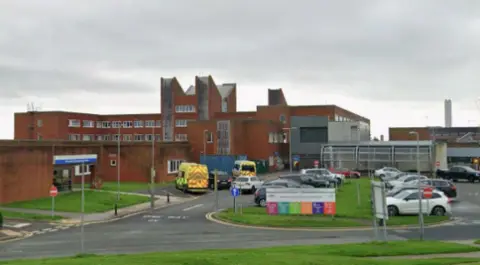
There are no guarantees on the future of a hospital's ICU unit despite recent positive progress, a trust has said.
A final decision on the removal of the highest level 3 intensive care at Furness General Hospital (FGH), in Barrow-in-Furness, is not expected until October 2027.
Lancashire and South Cumbria Integrated Care Board (ICB) had proposed the closure due to staff shortages and lack of demand.
The ICB and University Hospitals of Morecambe Bay NHS Foundation Trust (UHMBT) said there had been "positive steps forward" in recent months, including around recruitment, but added this did not guarantee reinstating the service.
Local MP Michelle Scrogham said she was pleased a working group she established was being given "time and space" to maintain what had been achieved so far, but added there was more to do.
The Labour politician had previously warned a closure would "not only impact the most critically ill patients but would also lead to a gradual decline in level 1 and level 2 care" at the hospital.
Level 3 care, for those patient requiring life support for multiple-organ failure, was suspended at the Barrow hospital last year.
The most unwell patients are currently being stabilised at FGH before being transferred 46 miles (74km) to the Royal Lancaster Infirmary.
 House of Commons/Roger Harris
The ICB and UHMBT said in a joint statement, two consultant intensivists had been hired and a funding bid for a research and education programme for nurses had been submitted.
Options to provide robotic surgery at the hospital were also being explored as a way to improve patient outcomes and help recruit clinicians, they added.
"We believe it is important that the work currently under way, together with the forthcoming Clinical Senate review, is allowed to further inform our understanding of what may be clinically, operationally, and financially safe and sustainable in the future," the ICB and the trust said.
"To be clear, the above is positive progress, but we are not yet in a place where we can safely reinstate ongoing level 3 care at FGH, nor is it a guarantee that we will be able to in the future."
A new model of care focusing on the sickest patients had also been developed and discussions with Defence Medical Services over providing addtional support continued, the joint statement added.