New Wales secretary questions calls for more Welsh government powers

 BBC
BBCThe new Welsh secretary has said he is not yet "entirely convinced" of the case for giving more powers to the Welsh government, although he remains "open to the conversation".
Stephen Kinnock said he wants a "collaborative relationship" with the Plaid Cymru administration, with the Welsh and UK governments "working in tandem".
First Minister Rhun ap Iorwerth has repeated calls for powers over policing and the Crown Estate to be devolved to Wales.
Kinnock said any constitutional changes should be judged on the outcomes they would deliver.
Aberafan Maesteg MP Kinnock was appointed Welsh secretary by new Prime Minister Andy Burnham on Monday, replaces Cardiff East MP Jo Stevens.
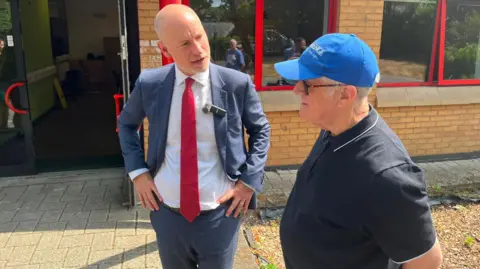
Speaking to BBC Wales, during a visit to a council-run community centre in Cardiff, Kinnock said his priority would be to act as "a strong voice for Wales at the cabinet table".
His comments came after First Minister Rhun ap Iorwerth renewed calls for powers over policing, justice, rail and the Crown Estate to be devolved to Wales.
"I think we have to be evidence-based and it's really important to look at what are the costs and benefits of making change," said Kinnock.
He argued that policing works across the England-Wales border and warned changes to the Crown Estate could "potentially destabilise the system" and have a "chilling effect" on investment.
"Would the Welsh people really benefit from a change? That's an open question. I'm not entirely convinced."
 Reuters
Kinnock said he wanted the UK and Welsh governments to work together in a "Team Wales approach".
"You can't be a team if one member of the team is being bypassed," he said.
Kinnock also confirmed the UK government remained committed to £14bn of rail investment in Wales.
He said he was looking forward to meeting ap Iorwerth in person.
"I think we can have a very honest and robust relationship. That's the way I like to do business.
"We will not always agree, but it's vital that we always work together for the benefit of the Welsh people."
While he said he remained open to discussing changes to the devolution settlement, he added: "As things stand, I don't believe that that case has been made."
Earlier on Wednesday, ap Iorwerth suggested Burnham may be more receptive to further devolution than his predecessor, saying the new prime minister was "open to listening, perhaps in a way that Keir Starmer wasn't".
The first minister told BBC Radio 4's Today programme that he wanted to persuade Burnham to devolve powers over policing and justice, rail and Wales' natural resources.
He said the pair had agreed to build a "positive" and "constructive" relationship during their first conversation since Burnham entered Downing Street.
"I know that he understands devolution for Manchester," he said.
"I want to help him understand what devolution means in Wales and what tools we need to make it work better."
On Tuesday Burnham told the leaders of Wales, Scotland and Northern Ireland that his government was focused on "practical measures, not constitutional changes like further referendums".