Summary

  • The US has confirmed it has lifted its naval blockade of Iranian ports, as the Iran deal comes into effect

  • Meanwhile, Iran's supreme leader, in a written message, says he initially disagreed with the deal, but allowed it to go ahead after assurances from the Iranian president

  • Mojtaba Khamenei also says that US President Trump came to the agreement "out of desperation"

  • Earlier, US Vice-President JD Vance said the 60-day period to reach a final agreement with Iran had begun

  • He defends the deal, saying that Iran will not receive money or sanctions relief unless it meets obligations from the agreement

  • The 14-point memorandum of understanding says the Strait of Hormuz will reopen and sets out a $300bn plan for Iran's "reconstruction" - here's what's in the deal

  1. BBC Verify

    Verified video shows blasts in south Lebanon overnightpublished at 13:35 BST 18 June
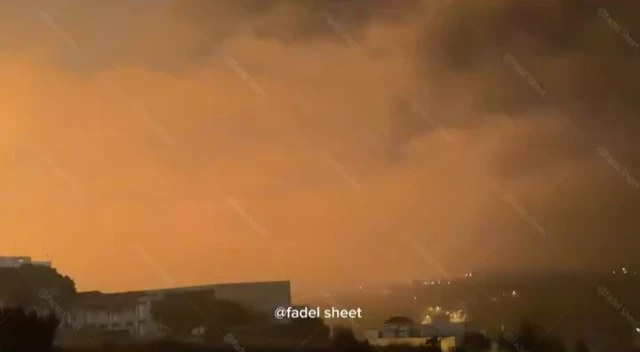
    The night sky over a village in Lebanon illuminatedImage source, Instagram/@director.fadelsheet.official
    Image caption,

    The night sky was illuminated by the nearby explosions

    By Emma Pengelly

    Despite the US-Iran deal calling for an end to military operations in Lebanon, bursts of gunfire and explosions were heard in verified videos from the southern Nabatieh region overnight.

    In the footage, filmed from the village of Kfar Jouz, flashes from explosions lit up the night sky, but the source of the blasts and exact locations are unclear.

    BBC Verify has checked footage of smoke plumes and explosions in south Lebanon, reportedly from Hezbollah and Israeli military clashes, every day since the framework agreement was announced on Sunday night.

  2. Netanyahu under pressure from opposition party to defy peace dealpublished at 13:17 BST 18 June

    Lucy Williamson
    Middle East correspondent, reporting from Jerusalem

    Israel’s Prime Minister Benjamin Netanyahu has come under fresh political pressure to defy the terms of Donald Trump’s ceasefire agreement with Iran.

    “I demand that the Prime Minister stand before the people of Israel and make it clear, both here and to the countries of the world: We are not part of the agreement. We do not accept any connection between the Iranian arena and the Lebanese arena,” said the head of the Yisrael Beiteinu opposition party, Avigdor Lieberman.

    “We will act solely in accordance with Israeli interests, and not in accordance with fuel prices on world stock exchanges,” he continued.

  3. Hardline Iranian leaders unhappy with US dealpublished at 13:01 BST 18 June

    Ghoncheh Habibiazad
    Senior reporter, BBC Persian

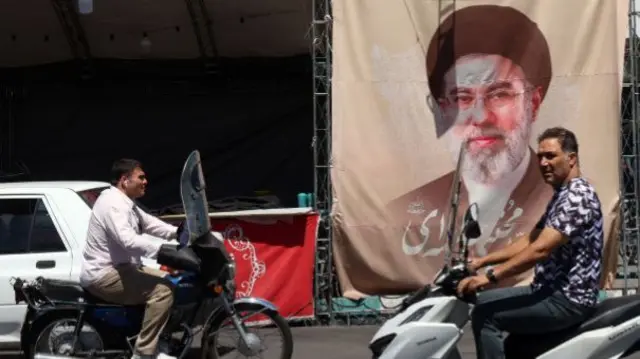
    a billboard of Iranian supreme leader Ayatollah Mojtaba Khamenei at Valiasr Square in Tehran, IranImage source, EPA
    Image caption,

    Mojtaba Khamenei pictured on a Tehran billboard on 15 June

    The person now missing from the negotiating equation is Iran’s late Supreme Leader, Ayatollah Ali Khamenei. He was the biggest critic of any deal with the US, and by killing him they somehow removed the main obstacle to a deal.

    Some of his hardline supporters are unhappy about the agreement. His son Mojtaba Khamenei has yet to make any statements about the deal in recent days, and has also not been seen publicly from months.

    But from what the top negotiators and Parliament Speaker Mohammad Bagher Ghalibaf were saying yesterday, it appears that he is making some (if not almost all) of the decisions in the country

  4. Agreement is 'a message from a powerful Iran' says presidentpublished at 12:46 BST 18 June

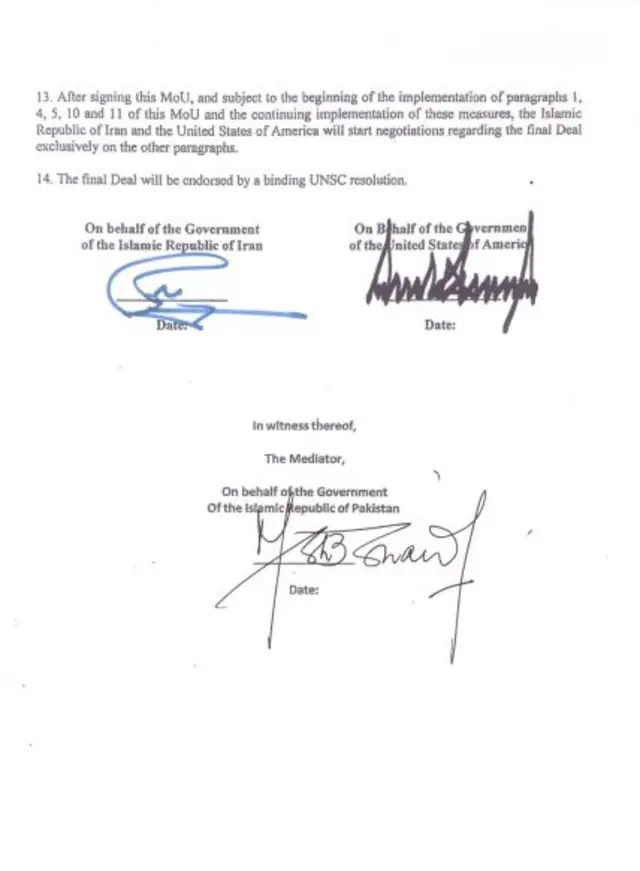
    The third page of the memorandum of understanding posted by Iran's president on social mediaImage source, Masoud Pezeshkian/X
    Image caption,

    The third page of the memorandum of understanding posted by Iran's president on social media

    Iran's President Masoud Pezeshkian has posted a picture on social media of the signed memorandum of understanding, saying it is "a message from a powerful Iran".

    Peace will be "realised in the shadow of mutual respect", he says.

    "The Islamic Republic of Iran has always been committed and steadfast to global peace while preserving its dignity and independence", Pezeshkian adds.

  5. Trump hails deal as major win, but tensions still remain - a recappublished at 12:23 BST 18 June

    Donald Trump has signed a Memorandum of Understanding (MOU) between the US and Iran to end the war, kickstarting a 60-day period in which both countries will work towards a final deal.

    The agreement centres around 14 core points, which we have summed up for you here, including the reopening of the Strait of Hormuz.

    Iran must be feeling quite pleased about this deal, our chief international correspondent Lyse Doucet writes, whereas for Israel, it presents another blow to Benjamin Netanyahu’s credibility.

    Trump has praised the agreement as a major win for the US, although there remain serious questions still to be resolved, not least the issue of Iran's nuclear programme.

    US Defence Secretary Pete Hegseth has threatened to reimpose an "ironclad blockade" if Iran does not do "what it says it's going to do" and give up its nuclear weapon ambitions.

    Meanwhile, Israel's military operations in Lebanon remain a 'stubborn' talking point with the US.

    The Israeli military says its forces are still operating in southern Lebanon due to "operational needs" - despite the memorandum ruling out any further hostilities.

  6. BBC Verify

    Three Saudi-flagged supertankers cross Strait of Hormuzpublished at 12:01 BST 18 June

    By Shruti Menon and Alex Murray

    BBC Verify has been looking into reports that three Saudi Arabian-flagged supertankers have transited the Strait of Hormuz.

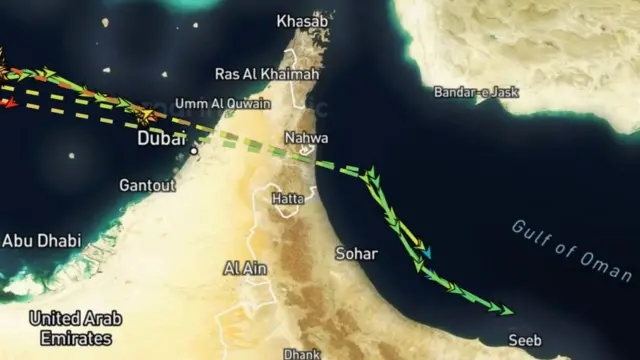
    Data from MarineTraffic suggests they made the crossing with their position transmitters off before switching them back on after crossing into the Gulf of Oman.

    The tankers - Awtad, Jaham and Shaden - have been anchored west of the strait in the Gulf since the start of the conflict.

    All three were loaded with oil at Ras Tanura in Saudi Arabia, according to data from MarineTraffic. Two took on cargo before the conflict, on 27 and 28 February, while the other one loaded a week into the war on 7 March.

    Awtad and Shaden are currently broadcasting Republic of Korea and Japan respectively as their intended destinations. Jaham isn’t broadcasting a location at present.

    Ship-tracking data shows the three tankers transit through the strait with their location trackers switched off and started broadcasting after crossing into the Gulf of OmanImage source, MarineTraffic
    Image caption,

    Solid lines in this MarineTraffic map show where the ships were broadcasting their locations - the dotted line where they turned them off

  7. Analysis

    Former secretary of state offers stinging indictment of dealpublished at 11:44 BST 18 June

    Paul Adams
    Diplomatic correspondent

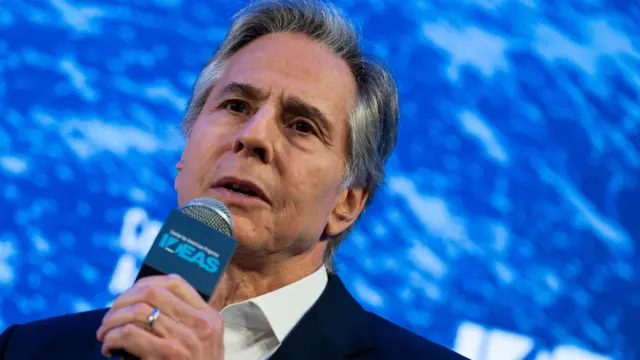
    Antony Blinken holds a microphone with a blue backgroundImage source, Reuters

    This deal has plenty of critics, including hawks on both sides. But as Iran and US brace themselves for the negotiations to come, some of the most trenchant criticism comes from a man who’s been involved in this process before: the former US Secretary of State Antony Blinken.

    “The only 'achievement' of the ceasefire,” he posted on X, “is the likely re-opening of the Strait of Hormuz – which was open before the war started. And we will apparently pay Iran to do so.”

    It’s a stinging indictment. Iran stands to benefit to the tune of billions of dollars in oil sales waivers and unfrozen assets, before making any real concessions on the all-important nuclear programme.

    But US officials who briefed reporters in Washington yesterday insisted that financial relief would depend on Iran’s behaviour during negotiations.

    “If they engage in good behaviour – for example, they get us the nuclear dust while we’re engaged in this final negotiation – then we will release some frozen assets in response to that,” an administration official said.

    Expect the negotiations to be tortuous and full of disputes. And to last considerably longer than 60 days.

  8. Israeli military says troops continue to operate in Lebanonpublished at 11:28 BST 18 June

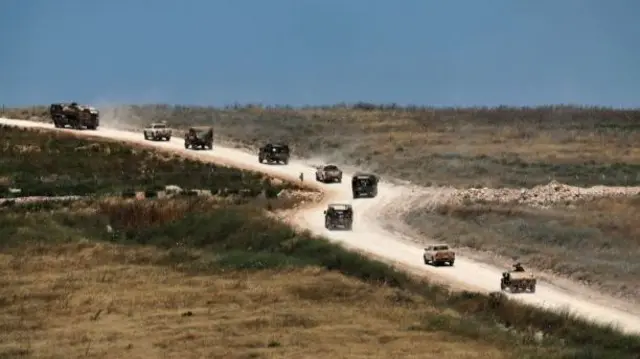
    Israeli military vehicles on the Lebanese side of the border, seen today from northern IsraelImage source, EPA
    Image caption,

    Israeli military vehicles on the Lebanese side of the border, seen today from northern Israel

    The Israeli military says its forces are still operating in southern Lebanon, within a security zone extending about 10km into the country.

    The Israel Defense Forces says its presence is due to "operational needs", in a post on its official Telegram channel, and that troops will continue to act to "remove threats".

    Earlier today, Lebanese media reported Israeli strikes in the south of the country - despite the US-Iran memorandum ruling them out.

  9. US ready to reimpose an 'ironclad blockade' on Iran if deal not upheld, says Hegsethpublished at 11:16 BST 18 June

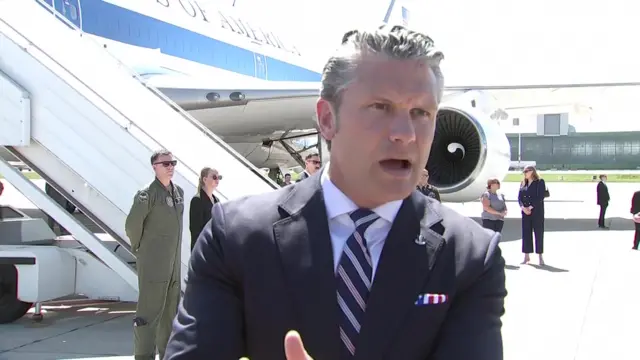
    Hegseth speaking to reporters in front of an airplaneImage source, Reuters

    If Iran doesn't comply with the terms in the memorandum, then the US is "more than able to reimpose an ironclad blockade," US Defence Secretary Pete Hegseth says.

    The US has agreed to lift its naval blockade which has stopped vessels travelling to or from Iran's coast since April as part of the deal signed this week.

    "If Iran does not do what it says it's going to do," which is to give up its nuclear weapon ambitions, then Hegseth says "the war department is here and prepared to restart if we need to".

    He says any US military action and negotiations will be "centred" on Iran's nuclear weapons.

    Hegseth also says there are European countries who are "prepared to step up" and help clear the Strait of Hormuz.

    But he calls directly on the UK to "step up, do even more, spend even more" - in particular, he says the UK should help the US if it requires access to military bases in the UK and Diego Garcia.

  10. US-Iran deal leaves serious questions still to be resolvedpublished at 10:54 BST 18 June

    Frank Gardner
    Security correspondent

    The Gulf Arab states are breathing a collective but cautious sigh of relief. Their vital maritime chokepoint, the Strait of Hormuz, is to reopen for normal traffic, while they hope to have seen the last of Iran’s incoming drones and missiles.

    But despite the success of negotiating this Memorandum of Understanding (MOU) there are some serious questions still to be resolved.

    Most crucial of all is the nuclear file. The coming 60 days is a very short period in which to thrash out just how Iran’s nuclear programme is going to be monitored to prevent any chance it could be secretly working on a nuclear weapon. It took ten times that length of time to reach the 2015 JCPOA deal that President Trump abandoned in his first term of office.

    When the mandated 60-day period of free traffic through the Strait is up then there remains the risk that Iran will try to impose a new paradigm on maritime traffic, charging ‘fees’ rather than ‘a toll’, which are effectively the same thing.

    Then there is the money challenge. Under the MOU, Iran is due to get a US $300bn fund for reconstruction, largely financed by the same Gulf Arab states it’s been attacking. Both they and the US will want to ensure that none of this money ends up funding the IRGC’s ballistic missile or drone programmes.

  11. What has Netanyahu said about the peace deal?published at 10:46 BST 18 June

    Benjamin Netanyahu has notably made no public remarks since the US and Iran signed a Memorandum of Understanding to stop the war last night.

    The Israeli prime minister has appeared to distance himself from the deal, telling Israeli television on Monday that Trump was leading negotiations.

    "I have expressed my views in various conversations," Netanyahu said in comments reported by Fox News. “As I said, we often agree, and we often disagree. That happens in the best of families.”

    Israel has not been directly involved in the peace talks, but Trump said during a press conference on Wednesday before the signing that he'd sent them a copy of the final text.

    Earlier we reported that "stubborn negotiations" are ongoing between the US and Israel regarding Lebanon, despite the memorandum stating that military operations in the country would cease.

    Meanwhile, comments from members of Netanyahu's own Likud party, and far-right cabinet ministers in his governing coalition, also show the pressure he faces from his own side.

    "Trump's agreement does not bind us," Israel's far-right national security minister, Itamar Ben-Gvir, wrote on social media on Monday. "We are not partners to this agreement that does not ensure our security."

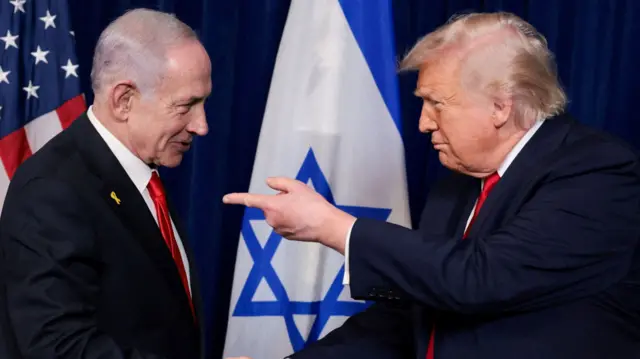
    Donald Trump points his finger towards Israeli Prime Minister Benjamin Netanyahu as they shake hands during a press conferenceImage source, Reuters
  12. Agreement between Iran and US a blow to Netanyahupublished at 10:34 BST 18 June

    Lucy Williamson
    Middle East correspondent, reporting from Jerusalem

    What Israeli forces do now in Lebanon could test the US ceasefire with Iran, and also the US-Israeli alliance – but since the ceasefire was signed, Israel’s prime minister has been silent.

    His silence echoes against growing demands from across Israel’s political spectrum that he defy Donald Trump and keep fighting Hezbollah in Lebanon.

    Israel’s UN ambassador Danny Danon, a close ally of Netanyahu, has described the ceasefire deal as “very bad for Israel”.

    It commits the US and its allies to ending hostilities in Lebanon, and respecting Lebanese territorial integrity. Israeli forces are currently occupying a large swathe of the country.

    “We must destroy Hezbollah’s army capacity before anyone tells us that there is a ceasefire,” said Michael Biton, a lawmaker with the opposition Blue & White party. “We have to protect ourselves. They still attack us. They still build capacity to attack us. And that’s something we cannot live quietly with.”

    Benjamin Netanyahu has staked his political future on the war with Iran and is still insisting that campaign has been a success, even as his critics list the ways Iran has emerged stronger from this conflict.

    The inclusion of Lebanon in the ceasefire deal is another sign of Tehran’s new influence.

    And the current rift with his American ally, another blow to Netanyahu’s credibility.

  13. Iran must be feeling quite pleased about this dealpublished at 10:18 BST 18 June

    Lyse Doucet
    Chief international correspondent

    We’ll soon find out whether this Memorandum of Understanding is a Memorandum of Misunderstanding.

    If you look at the black and white of the text, Iran “reaffirms” that it will not acquire a nuclear weapon - but that’s what it's been saying for years. It was in the 2015 nuclear accord President Trump pulled out of in his first term, declaring he could do a much better deal.

    In this 14-point framework, the only hint of the shape of Iran's nuclear programme is the mention of “down- blending” Iran's 440 kg of uranium, enriched to some 60%, dangerously close to weapons-grade.

    It’s a concession Iran made in the February 2026 talks in Geneva - two days before this war. There’s no mention of President Trump’s repeated demand that what he calls 'nuclear dust' is shipped to the United States.

    If Iran wants a web of crippling sanctions lifted, and assets unfrozen, it needs to make concessions on dismantling its nuclear programme.

    But what it already has in this framework is immediate waivers on exporting its crude oil, its petroleum products, and a $300bn “reconstruction fund” being put in place.

    This morning Iran must be feeling quite confident and quite pleased about this deal.

  14. 'It smacks of appeasement' - how some Republicans see the dealpublished at 10:05 BST 18 June

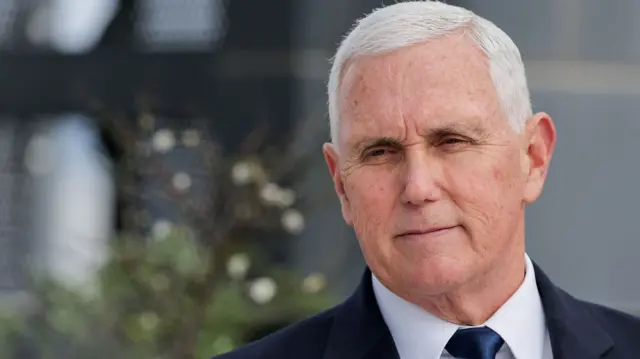
    Mike PenceImage source, Reuters

    We've had some reaction from Republican politicians in the US who have criticised the Iran deal.

    Former US Vice-President Mike Pence says on X that the Memorandum of Understanding “does smack of the kind of appeasement that our administration rejected in the Obama-Iran nuclear deal."

    He told Fox News he gave credit to Trump for launching the war, but he says the deal has no commitment to the dismantling of Iran's nuclear programme or to "end supporting terrorist proxies."

    "I don't trust the Iranians," Pence adds.

    Congressman Thomas Massie raises concerns about the $300bn fund earmarked in the deal for Iran, posting on social media that "$300 billion is 5 X as much as Congress spends on our roads & bridges annually."

    For context: The text of the MOU says the $300bn will be developed with regional partners, and does not come from the US itself.

    “Reagan is rolling over in his grave,” says Louisiana Republican Senator Bill Cassidy. "This is the worst foreign policy blunder in decades."

    Iran has "learned that threatening the Strait of Hormuz works," and will do it again, he adds.

    But others, such as South Carolina Senator Lindsay Graham are backing the deal. He has posted on X that it will create economic stability for the US and the world.

  15. Trump reacts to criticism he has not been 'tough enough' on Iranpublished at 10:00 BST 18 June

    Donald Trump has taken to his Truth Social site to hit back against criticism that he has not been "tough enough" on Iran.

    He says: "These fools, who think I haven’t been tough enough on Iran, when the Stock Market Just Hit A RECORD HIGH, and Oil prices are “tumbling” down, are either jealous, bad people, or stupid. MAKE AMERICA GREAT AGAIN!!! President DJT"

    • For context, some US lawmakers have been criticising Trump for the US-Iran Memorandum of Understanding, warning that it does not adequately curb Iran's nuclear ambitions and leaves Iranians with the power to leverage the Strait of Hormuz. We will bring you more on this shortly.
  16. Iranian president signs Memorandum of Understanding on behalf of Iranpublished at 09:51 BST 18 June

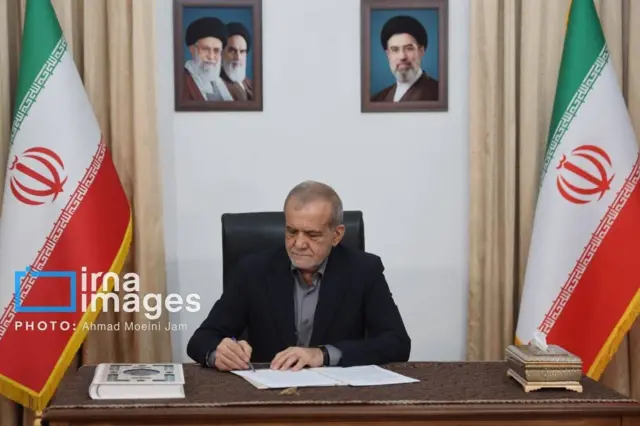
    These images have been shared by the X account of the Government of the Islamic Republic of Iran and the Telegram account of Iran's Mehr news agency this morning.

    They show Iranian President Masoud Pezeshkian signing the Memorandum of Understanding on behalf of Iran.

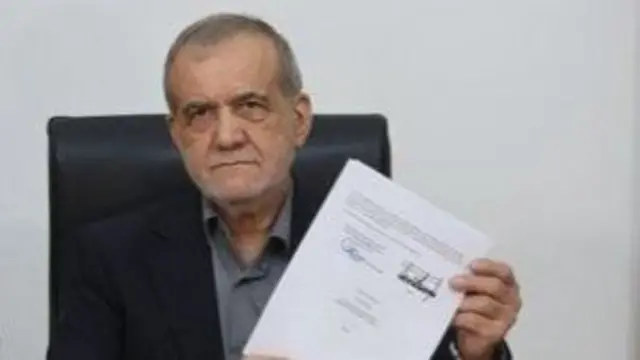
    Iranian president Masoud Pezeshkian holding up a signed copy of the memorandum of understandingImage source, IRNA images
    Image caption,

    Iranian President Masoud Pezeshkian signed the memorandum on behalf of Iran

    Iranian president Masoud Pezeshkian signing the memorandum of understandingImage source, IRNA images

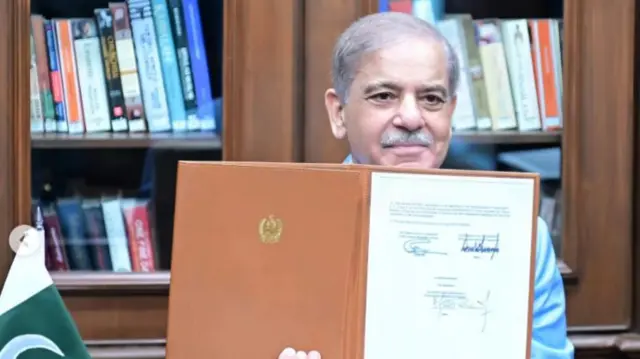
    Pakistani Prime Minister Shehbaz Sharif has also shared photos of himself signing the memorandum as a mediator.

    And you can see President Trump adding his signature in our video at the top of the page or in our previous post.

    A photo of Pakistani Prime Minister Shehbaz Sharif holding up a photo of a signed Memorandum of UnderstandingImage source, Instagram/@shehbazsharif
    Image caption,

    Pakistani Prime Minister Shehbaz Sharif also signed the memorandum

  17. International Atomic Energy Agency ready for 'concrete steps' on Iran nuclear agreementpublished at 09:39 BST 18 June

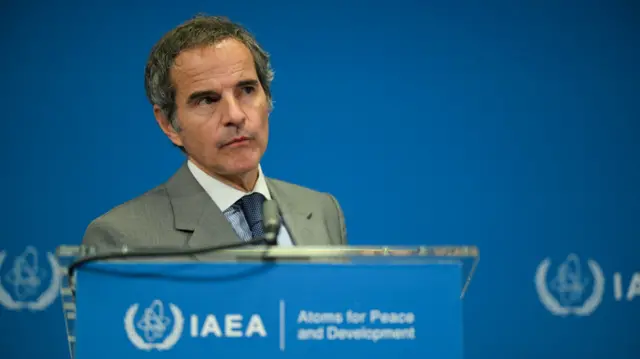
    Rafael Grossi at a IAEA podiumImage source, Reuters

    The director general of the International Atomic Energy Agency has said they are ready to figure out "concrete steps" to address Iran's nuclear programme.

    As a reminder, within the current agreement between the US and Iran, Iran has recommitted to not procuring or developing nuclear weapons while both sides have agreed to deal with the enriched uranium Tehran already has.

    In a briefing this morning, Rafael Grossi says that speculating about what might cause problems technically "is not wise".

    "I initiate any negotiation on the assumption that we are all in good faith, that we want to be successful.

    "If they have signed this [...] it's because everybody wants this to be a success."

    He adds the agency has a "pretty good idea" of the specific things and places the agency will need to access, but "it would be incorrect to step ahead of the process".

    "We are at the gates of the decisive phase of the technical conversations."

  18. War has taught Iran how to use the Strait of Hormuz as a weaponpublished at 09:21 BST 18 June

    Jeremy Bowen
    International editor

    An oil tanker waiting in the Gulf of Oman. It's seen from the distance and in the foreground, two men stand on a pier.Image source, Anadolu via Getty Images
    Image caption,

    Ships wait in the Gulf of Oman on Wednesday, preparing to transit through the Strait of Hormuz

    When all this started on 28 February, Donald Trump and Benjamin Netanyahu said there was going to be a regime change.

    And now we're at a point where the Iranian regime and the Americans, through intermediaries, did this deal essentially speaking to each other as equals.

    We're looking at an empowered Iranian regime which has had its worst nightmare happen - a joint attack by the Americans and the Israelis aiming at a regime change. They got through it. It didn't happen.

    Iran has spent billions over the years - first of all on their nuclear programme, which they have always denied was to do with getting a weapon - and also on building their network of regional allies, starting with Hezbollah in Lebanon.

    But what they've found is that closing the Strait of Hormuz is way cheaper and way more potent. It's a weapon that can actually be used, unlike the threat of a nuclear weapon, which is about deterrence.

    Just throwing a few missiles at a few tankers will once again re-close the Strait of Hormuz if Iran wanted to - and everybody knows that. And that is something that must be very empowering for the regime in Tehran.

    Let's not forget Iran has taken an absolute hammering. They've got billions of dollars in damage that needs to be fixed. So actually, the economic inducements in the Memorandum of Understanding may push them towards thinking, let's do a deal on the nuclear issues.

  19. Lebanon remains a 'stubborn' talking point between US and Israelpublished at 09:13 BST 18 June

    A senior Israeli official close to prime minister Benjamin Netanyahu has told Reuters news agency that "stubborn negotiations" are ongoing between the US and Israel regarding Lebanon.

    They added that Israel has no intention of backing down on its position of continuing its deployment of troops in Southern Lebanon.

    Despite the Memorandum of Understanding stating that military operations would cease in Lebanon, as we reported in our previous post, Lebanese media is reporting strikes in the country.

  20. Lebanese media reports Israeli strikes in south of countrypublished at 08:49 BST 18 June

    Lebanese media is reporting Israeli strikes in the country, despite the US-Iran memorandum of understanding ruling them out.

    Lebanon's state-run National News Agency (NNA) says a person was killed by an Israeli strike on a car in Kfar Tebnit, in the Nabatieh area in southern Lebanon this morning.
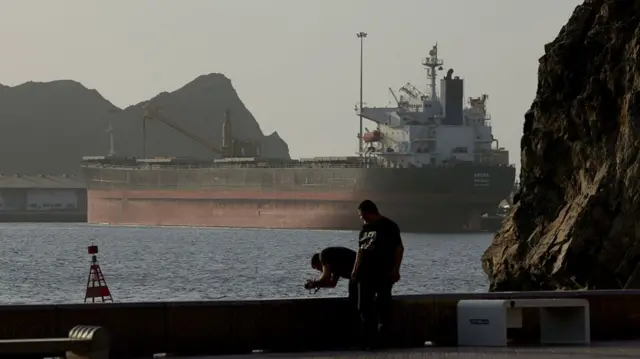
    The agency also reported drone strikes in the towns of Beit Yahoun and Hadatha.

    Earlier, the Israel Defence Forces (IDF) reported on Telegram that a soldier had been killed in an incident in southern Lebanon.

    The IDF said on X: "Hezbollah continue spreading their terror across southern Lebanon, threatening our civilians and soldiers."

    As we've been reporting, the memorandum of understanding signed by the US and Iran yesterday begins with the point: "The immediate and permanent termination of military operations on all fronts, including in Lebanon."

    The Israeli government has yet to publicly respond to the US and Iran deal signing.