Summary

  1. Hosepipe ban extended to affect 2.4 million peoplepublished at 15:37 BST 20 July

    We are wrapping up our live coverage now - thank you for joining us. Here's a reminder of what has happened today.

    You can read more about the hosepipe ban here, and follow the BBC website for further updates on the hosepipe ban.
  2. 'We understand that frustration,' South East Water sayspublished at 15:24 BST 20 July

    Our environment correspondent Fiona Irving has been speaking to Nicola Higgins, from South East Water, who has been talking about the restrictions announced today.

    Higgins says South East Water "absolutely understands that frustration" from customers, and that it will "take time" to break the cycle of summer hosepipe bans.

    She also says the company is "working around the clock" to fix leaks, with 100 million litres a day being lost from its network.

    Hosepipe restrictions will be monitored on a regular basis and will be lifted "as soon as we are in a position to lift those restrictions", she says.

    When pressed on water outages this weekend in Tunbridge Wells, Higgins says: "This isn't the level of service we want to provide, or that customers deserve."

  3. Sutton and East Surrey Water 'not planning to introduce' hosepipe banpublished at 15:14 BST 20 July

    A SES Water logoImage source, Getty Images

    Sutton and East Surrey (SES) Water says it is aware of the South East Water hosepipe ban, but is "not planning to introduce" one.

    SES Water supplies water to 750,000 people across parts of Surrey, Kent and south London.

  4. How is the hosepipe ban enforced?published at 15:07 BST 20 July

    Water companies are allowed to prohibit uses of water during times of serious water shortage under the Water Industry Act, and this includes the use of hosepipes.

    South East Water previously said contravening the ban was a convictable offence, which could lead to fines of up to £1,000.

    "Prosecution is very much a last resort and something no company wants to have to do," the company said on its website.

  5. South East Water wants to 'break this cycle'published at 14:46 BST 20 July

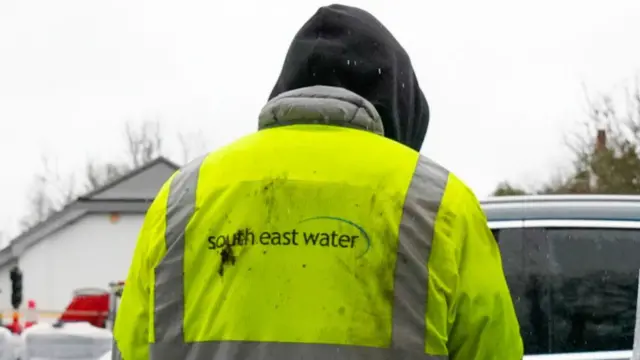
    A person in a high vis yellow jacket with "South East Water" on the back.Image source, Getty Images

    Douglas Whitfield, water supply director at South East Water, said: “Our priority is to restore long-term resilience to break this cycle.

    "We’re actively developing new water sources to build a more resilient supply for your community and to secure our water future.

    “I would like to thank everyone who has already taken steps to try and reduce their overall water use.”

  6. Ban must not last longer than 'absolutely necessary', MP sayspublished at 14:31 BST 20 July

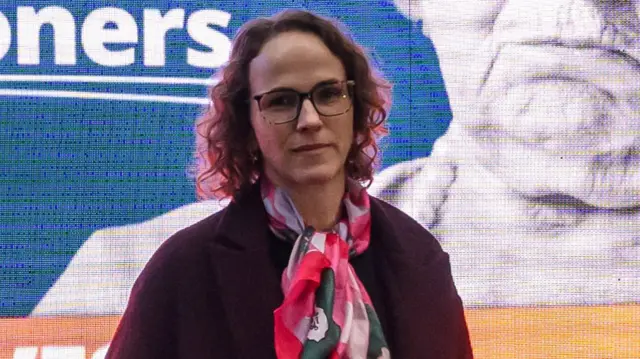
    A woman with shoulder-length brown, curly hair. She is wearing glasses, a claret overcoat and a pink scarf.Image source, Getty Images

    Mid Sussex MP Alison Bennett says the hosepipe ban announcement "only adds to the concerns" she raised at Prime Minister's Questions last week about South East Water's (SEW) supply resilience.

    She says the ban that came in last July was extended for seven months, including through a wet winter.

    "Temporary restrictions can be helpful to better secure our drinking water supply during exceptionally dry weather, but they must not become the norm because of inadequate investment, high leakage and weak infrastructure, and SEW must not extend this ban longer than absolutely necessary," the Lib Dem MP says.

    "Residents are being asked to play their part. South East Water must play its part too."

  7. What is South East Water doing to help?published at 14:07 BST 20 July

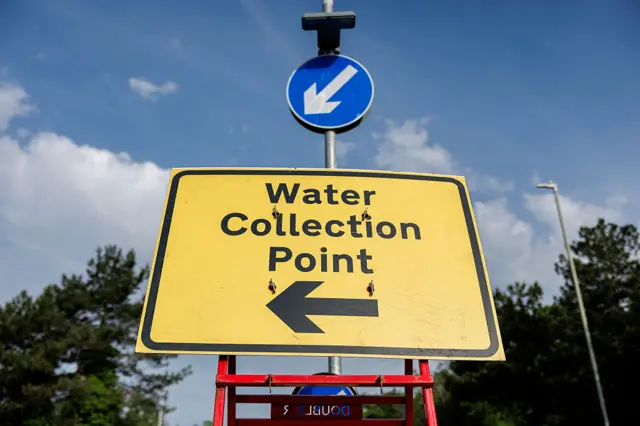
    A yellow sign which says Water Collection Point.Image source, Getty Images

    South East Water says it is working in a number of areas to improve its supply resilience.

    This includes:

    • Repairing bursts and leaks
    • Developing water sources for the longer term
    • Replacing pipes
    • Working with landowners to improve rivers and groundwater
    • Available water treatment works running at full capacity
    • Teams actively moving water around the network to support areas seeing the sharpest drops in storage levels

  8. 'Appalled' MP says he blames 'years of underinvestment'published at 13:39 BST 20 July

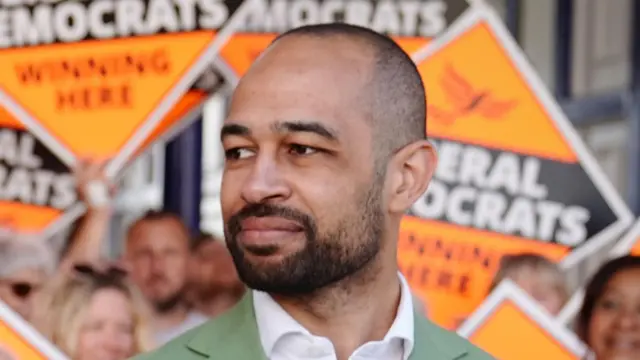
    Josh BabarindeImage source, PA Media

    Eastbourne MP Josh Babarinde says he is "appalled" by the hosepipe ban announcement and has written to South East Water's (SEW) CEO "demanding answers".

    "Since becoming Eastbourne’s MP, I have supported residents through five major water outages and now three summers of water restrictions," he adds.

    "Let me be clear. This is the direct result of years of underinvestment in upgrading infrastructure and building resilience."

    The Liberal Democrat MP says he asked SEW about the company upgrading its infrastructure to improve its resilience.

  9. Who is exempt?published at 13:28 BST 20 July

    There are two categories of exception to the hosepipe ban, South East Water says.

    One is customers on the company's priority register service that are "unable to make reasonable adjustments". This includes people who are blind or have a chronic or serious illness.

    The other is for customers who need a hosepipe for other reasons, including animal welfare and business needs.

  10. 'Customers sick to death of living under constant cloud of uncertainty'published at 13:01 BST 20 July

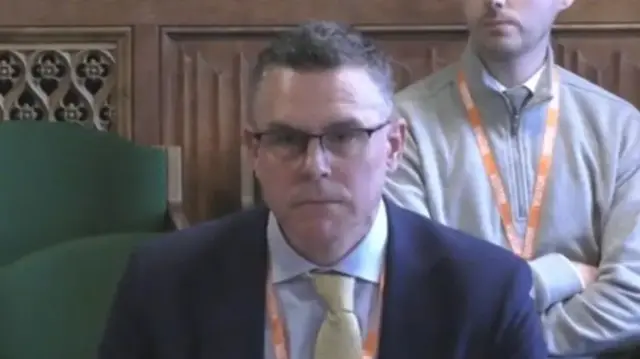
    A man with short dark hair with a navy suit and yellow tie on.Image source, Parliament TV

    Mike Keil, chief executive of the Consumer Council for Water, says water companies have a responsibility to act when sustained hot weather and rising demand puts the environment and essential water use at risk.

    "South East Water also has a responsibility to get a grip of its network having inflicted yet more disruption on long-suffering customers in and around Tunbridge Wells over the weekend," he added.

    "People in the area are sick to death of living under a constant cloud of uncertainty as to whether their taps will keep running and it also undermines customers’ own motivation to save water."

  11. When will the ban be lifted?published at 12:43 BST 20 July

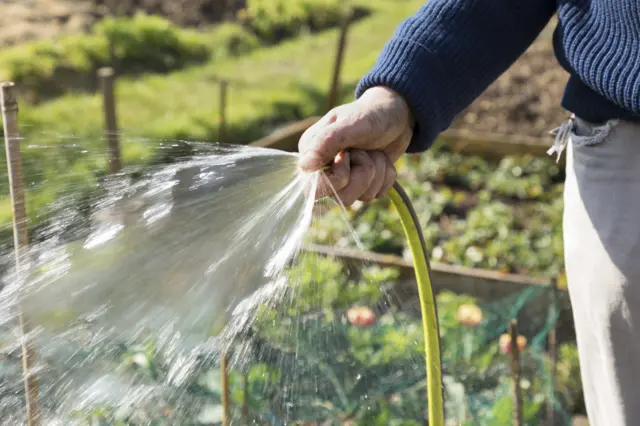
    A person watching a garden with a hose.Image source, Getty Images

    The hosepipe ban is being kept under "constant review", South East Water says.

    It says the ban is likely to continue until it is confident that:

    • Water demand has reduced to manageable levels
    • Water resources are back to normal levels
    • There is no further risk of supply interruptions across the network throughout the summer
  12. Ban a response to 'record-breaking weather', says SEWpublished at 12:29 BST 20 July

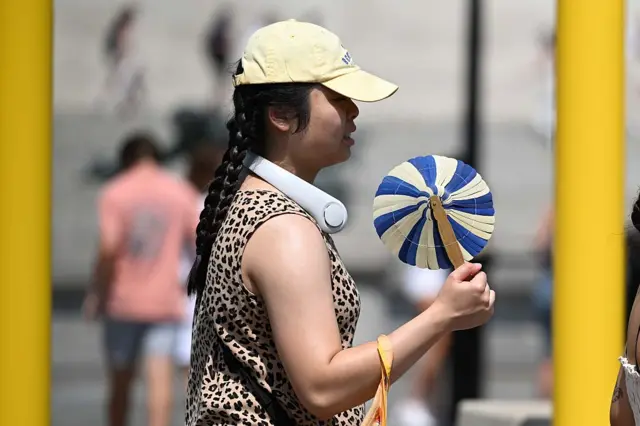
    A woman walking with a hat on, a fan in her hand, and a portable fan round her neckImage source, Getty Images

    The UK record for the hottest day in June was broken for a third day in a row last month, with temperatures reaching 37.3C, the Met Office said.

    The 50-year-old record was beaten by more than a full degree, highlighting the intensity of the heatwave which gripped the country.

    As of yesterday, Wisley in Surrey has also experienced 31 dry days, and for a large area of central England it has been the longest dry spell in 30 years.

    SEW says that although there are "different reasons" for the ban based on the region, "most causes" are due to the "record-breaking weather".

  13. Just joining us? Here is your lunchtime round uppublished at 12:11 BST 20 July

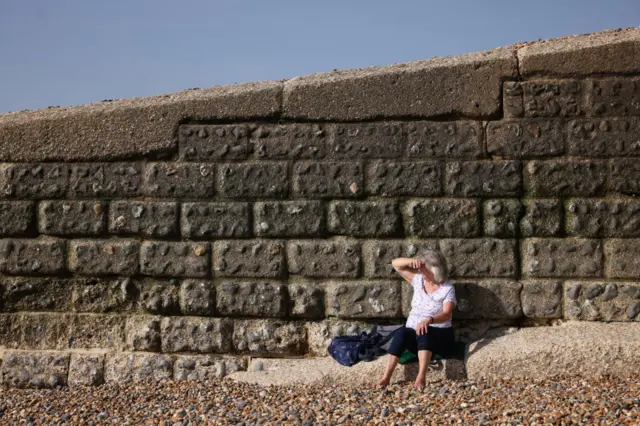
    A woman shielding her eyes from the son and looking out at the sea.Image source, Getty Images

    South East Water (SEW) is extending a hosepipe ban to include all of its customers in Sussex, Surrey, Hampshire and Berkshire, bringing the total number of people impacted up to 2.4 million.

    Previously, the ban has just been in place for those in Kent.

    SEW says it has to bring in the hosepipe ban for the remaining counties to protect some groundwater sources because river levels have declined.

    This is due to lower than average rainfall, continued hot weather and high demand, the company says.

    The temporary ban officially comes into force for all the remaining counties from 00:01 BST on Saturday, but customers are being asked to abide by it "immediately".

  14. Hosepipe ban follows string of problems for South East Waterpublished at 11:45 BST 20 July

    David Hinton in a light blue shirt and dark jacket. he is looking at the camera and has a stern expression.

    South East Water has been at the centre of a string of problems over the past few months.

    In November, 24,000 SEW customers lost supply or pressure in the Tunbridge Wells area before about 30,000 homes in Kent and Sussex were hit with supply issues just weeks later.

    Customers were advised during the issues in 2025 to boil their water before consumption for a nine-day period after supplies returned.

    Chief executive David Hinton subsequently stood down from the post, but said he would carry on working over the summer months.

    Earlier in July, SEW was ordered earlier in July to spend £30.5m on improvements after investigations by industry watchdog Ofwat.

    The firm warned in its annual report it needed to secure fresh financing to stay afloat after taking a £55m hit from outages over the winter.

    The water supplier said it was in discussions with lenders to agree a new loan facility.

  15. Fourth hosepipe ban in five years for Sussex customerspublished at 11:23 BST 20 July

    Fiona Irving
    South East environment correspondent

    This is the fourth hosepipe ban in five years for South East Water customers in Sussex.

    The company describes the repeated restrictions as “challenging”, and after another weekend that left thousands in Tunbridge Wells without water, many customers are all too familiar with those challenges.

    The reason for this ban differs from the restrictions imposed in Kent earlier this month.

    That was driven by treatment works struggling to process and supply water quickly enough. Today’s ban is about protecting raw water supplies in rivers and underground aquifers.

    Despite a wet winter, and reservoir levels in Sussex being around 10% higher than they were when the last ban was introduced, South East Water says below-average rainfall since March, combined with prolonged hot weather and high demand, means restrictions are now needed to “safeguard” water resources.

  16. Hosepipe ban comes after bill hikepublished at 11:04 BST 20 July

    South East Water raised prices by an average of 7% from April, bringing the average yearly bill to £324.

    Many of its customers reacted angrily to the move, with one woman in Kent telling the BBC she felt like she was being "robbed".

    Water UK, the industry trade body, said bill increases were needed to fund vital upgrades to the system and tackle the spillages which had led to concerns from the public.

  17. Reasons behind Surrey, Hampshire and Berkshire banpublished at 10:44 BST 20 July

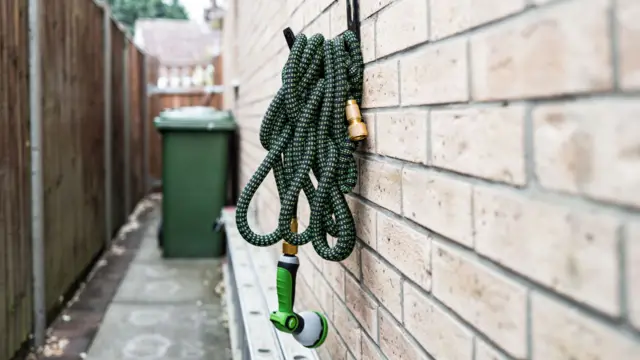
    A hosepipe wrapped up and placed on a hook on the outside of a brick house.Image source, Getty Images

    South East Water (SEW) says one of the main reasons the ban has been brought in for its customers in Surrey, Hampshire and Berkshire is because the level of the Thames is low.

    This meant SEW needed to reduce the amount it was taking to protect the river, it added.

    Another reason for the ban across the counties is because underground aquifers are under "severe stress" because of the hot weather and lower than average rainfall.

    "The area has only received 64% of average rainfall since March, and we’ve also faced three heatwaves," SEW explained.

  18. 'I think there's quite a lot of frustration out there from people'published at 10:32 BST 20 July

    A woman with short, blonde hair wearing a high vis yellow jacket.

    BBC South East's environment correspondent Fiona Irving said "you could probably see from a while off" that the hosepipe ban was coming.

    Speaking to BBC Radio Sussex, she said: "I think what people will be very frustrated about is that South East Water (SEW) loses 100 million litres of water a day through leaks and the hosepipe ban will save 3-7% of water from the network. So that's less than they lose every day from leaks.

    "So yes, you can't magic water out of thin air, you have to wait for the rain and you have to find ways of storing it and that takes time, but you can sort your leaks out and SEW say they are doing that.

    "They are one of the best performers for sorting leaks out, they say, but when you're losing 100 million litres of water a day through leaks and then you're calling on your customers to stop using their hosepipes, I think there's quite a lot of frustration out there from people.”

  19. Sussex only had 55% of average rainfall since March, South East Water sayspublished at 10:16 BST 20 July

    A reservoirImage source, Getty Images

    South East Water said there were two reasons why it needed to apply a temporary hosepipe ban in Sussex.

    One was because the level of Arlington Reservoir had dropped to where its drought plan stated it needed to introduce restrictions.

    And the second was because the area only received 55% of its average rainfall since March.

    "This means the reservoirs and aquifers will continue to drop at a faster rate as summer goes on," the company added.

  20. More than two million people impacted by banpublished at 10:02 BST 20 July

    South East Water has confirmed that extending its hosepipe ban means a total of 2.4 million people will be affected.

    That is all of its customers across Hampshire, Berkshire, Surrey, Sussex and Kent.