All about the menstrual cycle
Growing up, our bodies and lives continue to go through many changes. As children approach and enter adolescence, they will go through puberty, have growth spurts or start menstruating.
But what is menstruation? And how much do you know about it?
Here, BBC Bitesize shares facts surrounding menstruation, the four phases of the menstrual cycle and more. You can also take our IYKYK menstrual myth busting quiz below - good luck!

What is menstruation?
Menstruation, or a period is the shedding of blood and tissue from the lining of the Also known as a womb. This is where the fertilised egg (ovum) develops., which exits the body through the vagina during the menstrual cycle.
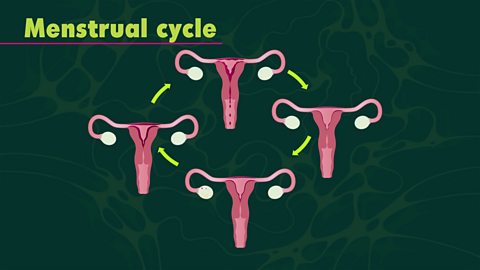
Recurring series of events in the human female reproductive system. is the time from the day a period starts, to the day before the next period. It is a central part of the female human reproductive process.
The length of this cycle can vary, with the average length being a 28-day cycle. Nonetheless, regular cycles that are longer or shorter than this, from 21 to 35 days, are considered normal.
But did you know that there are four phases of a cycle - menstrual, follicular, ovulation, and luteal? Each phase brings a range of changes, from shifts in hormone levels to ways you may act or feel.
But what happens in each phase and when do these changes typically occur? Bitesize has got the answers - period!
When is the menstrual phase?
The menstrual phase is the first stage of the menstrual cycle. It usually occurs during days 1-7 of the cycle and begins on the first day of your period. This phase starts when an egg released during the previous cycle has not been fertilised.
The menstrual cycle is controlled by Chemical messenger produced in glands and carried by the blood to specific organs in the body. that prepare the female reproductive system for pregnancy by thickening the lining of the uterus. The hormone A female sex hormone produced in the ovaries, which is responsible for puberty in girls and regulation of the menstrual cycle. helps repair and thicken the uterus lining and Sex hormone produced by the ovaries and placenta. helps to maintain it.
If the egg that is released from an ovary is not fertilised, the levels of the oestrogen and progesterone drop. This causes the uterine lining to shed, and a flow of blood called a period.
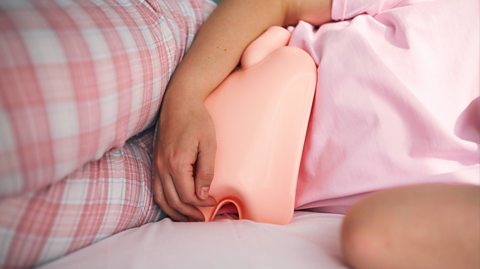
Whilst each person’s symptoms may be different and vary from month to month, healthcare professionals have explained that menstrual periods may cause:
- Cramping (period pain)
- Tiredness and lower energy levels
- Nausea
- Mood swings
- Bloating
- Headaches
What is the follicular phase?
The follicular phase starts on the first day of a period (so there is a bit of overlap with the menstrual phase). It ends when ovulation begins. How long the follicular phase lasts may vary from person to person. It is estimated to last around 14 days (if a person has a 28 day cycle) but can be longer or shorter depending on an individual’s regular cycle length.
During this phase, the blood loss stops and hormone levels begin to rise. The pituitary gland (also known as the ‘master gland’) is responsible for producing essential hormones such as It stimulates oestrogen production and the growth of follicles (egg-sacs) in the ovary. It is secreted by the pituitary gland. during this phase. The increase in FSH causes the maturation of an egg (or ova) in one of the ovaries and stimulates the ovaries to release oestrogen.
As oestrogen levels rise, this causes the lining of the uterus to thicken, which is needed if an egg is fertilised. These heightened oestrogen levels also signal to the pituitary gland to stop releasing FSH so that only one egg is released.
Associated characteristics of the follicular phase (mid – late stage):
- A brighter mood – Rising oestrogen levels can help boost mood. This could make you feel more optimistic and motivated.
- Increased energy levels – As a period ends, higher oestrogen levels can create a boost in energy.
- Improved sleep quality – Changes in hormone levels during this phase can support more restful and better sleep.
When does the ovulation phase occur?
According to the NHS, ovulation happens “around 10-16 days before the next period.” Again, this can vary as, for those who have regular cycle, ovulation often occurs around day 14 but for those who have irregular periods, this could be earlier or later.
During the ovulation phase, the rise in oestrogen triggers the pituitary gland to release other essential hormones such as Luteinising Hormone, secreted by the pituitary gland, which stimulates ovulation.. This hormone sends signals to the ovary to release the mature egg, which travels through the fallopian tubes, towards the uterus.
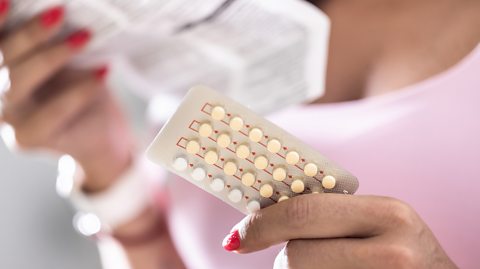
It is during this short time whereby a female is most fertile and therefore most likely to get pregnant. The NHS explains that “if ovulation doesn't occur, then becoming pregnant can’t occur.” Some methods of hormonal contraception prevent the production of FSH, so that eggs cannot mature, reducing the chances of pregnancy.
Associated characteristics of the ovulation phase:
- A boost in confidence: As oestrogen peaks, this can give the body a boost!
- Light cramping: As the egg moves through the fallopian tube, this may cause mild, one-sided cramping in the lower abdomen.
- Change in The body’s lowest resting temperature.: A small increase in body temperature can occur over the three days leading up to and around ovulation.
- Appetite changes: Whilst more research is needed, some studies have suggested that appetite may be affected by hormones during ovulation.
What is the luteal phase?
The luteal phase is the last phase of the menstrual cycle. It occurs after ovulation and continues until the first day of your next period. On average, it lasts for around 14 days but again, this is dependent on a person’s regular cycle length. The purpose of this phase is to prepare the uterine lining for a potential pregnancy. It does this through increasing the levels of the hormone - progesterone.
The changes in progesterone levels cause the womb lining to thicken for a fertilised egg to be implanted. If the ovum (egg) is fertilised, progesterone levels remain high and menstruation will not occur. If fertilisation has not happened, then the level of progesterone will drop and a period will follow.
Associated characteristics of the luteal phase:
- PMS (Premenstrual Syndrome) – This is the body’s response to changing hormone levels. In the luteal phase, as hormone levels begin to drop, symptoms such as bloating, mood swings and hormonal acne can occur.
- Food cravings – Experts have reported that rising progesterone and falling oestrogen can lower serotonin. As such, craving sweet treats like chocolate can occur – so give in to the call of the cocoa!
- Fatigue: Progesterone has a ‘calming effect’. With higher levels of this hormone, it is possible to feel drowsy or more tired than usual.
Do males experience a hormone cycle?
The simple answer is yes, they do. The main difference is that this cycle runs much shorter with hormonal levels shifting over a 24 hour period.
The main male reproductive hormone testosterone peaks at its highest in the morning, with levels decreasing throughout the day. As such, they may feel more energetic and focused in the morning and more fatigued as the day progresses.
Hormone imbalances and irregular periods
The body’s endocrine system controls hormone levels using An organ or tissue that makes a substance for release, such as a hormone.. Hormonal imbalances in females often involve disruptions in the endocrine system, meaning there is too much or too little of a hormone in the bloodstream.
If there is an imbalance, this can lead to changes to the menstrual cycle and result in irregular periods. According to the NHS, a period is considered irregular if “the gap between them is less than 21 days or more than 35.” Many people use an app or a diary to help keep track of their periods to see if they are irregular or to identify their fertile window, if trying for a baby.

There are lots of reasons periods can be irregular, including puberty, pregnancy, and menopause. In many cases, it’s completely normal, though it can sometimes be linked to hormonal conditions like Polycystic ovary syndrome or recently reclassified as Polyendocrine Metabolic Ovarian Syndrome is a condition that affects how a woman's ovaries work.. If anything doesn’t feel quite right, check in with a doctor who should be able to advise you.