Cities under the sea
All over the world, lost towns and cities lie just beneath the water's surface.
Forget Atlantis - the Ancient Greek philosopher Plato's fictional island in the Atlantic Ocean, built by the sea god Poseidon with concrete rings of water and land and a powerful naval empire.
These cities were real places, once lively with people and their stories. Now, they lie buried by natural disasters, rising sea levels or deliberate flooding.
Dive deep with BBC Bitesize and explore the mosaics, hieroglyphics and statues which once lived above ground.
Baiae, Italy
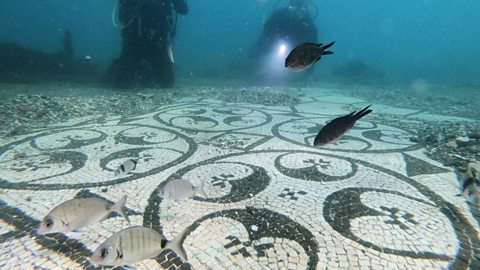
Once a party town for the Ancient Romans, Baiae was famous for its soothing hot springs, pleasant weather and extravagant buildings. Julius Caesar and Nero both had luxury holiday villas here, and the emperor Hadrian actually died in the city in AD 138.
Unfortunately, the same volcanic activity that created the city's famous thermal springs also led to its downfall. It was built on top of a super volcano called the Campi Flegrei, close to Naples. Over time, bradyseism - a process in which the ground level slowly sinks by a few metres - caused much of the city to sink below sea level.
In 2002, these submerged parts of Baiae were designated a Marine Protected Area by the local authorities. This means only licensed scuba divers can explore the ruins, with the help of a local guide.
Thonis-Heracleion, Egypt
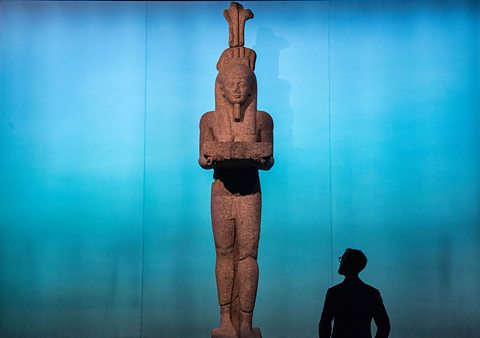
Frequently mentioned in ancient legends, Thonis-Heracleion was supposedly the place where the legendary Ancient Greek hero Heracles (also known as Hercules) first set foot in Egypt. 'Thonis' is the original Egyptian name, while Heracleion is the Greek name given in honour of Heracles.
In Greek mythology, Helen of Troy is also said to have visited the city with her lover, Paris, before the Trojan War. Located at the western mouth of the River Nile, this was a prosperous port. Goods from across the Mediterranean passed through its complex canal network, evidenced by the discovery of 60 shipwrecks and over 700 anchors.
One of the most impressive artefacts recovered from the Thonis-Heracleion is the Decree of Saïs. This two-metre-high black stone slab, known as a stela, is engraved with early 4th century BC hieroglyphics. These reveal crucial details of the Egyptian taxation system, as well as confirming that Thonis-Heracleion is a single city.
Derwent, England
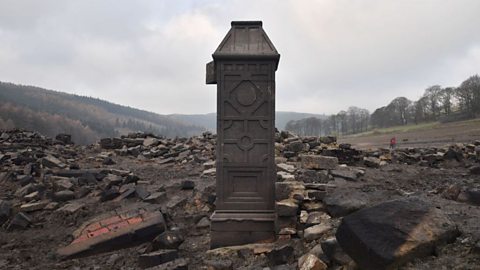
The village of Derwent, in Derbyshire, was deliberately submerged in order to create the Ladybower Reservoir.
As cities such as Derby, Leicester and Nottingham continued to expand in the early 20th century, their growing populations required a greater supply of water. To do this, a dam and reservoir needed to be built.
The original plan was to build two reservoirs, Howden and Derwent, further up the valley to spare the village. But it was clear these wouldn't be enough, and a third reservoir would be needed. Work began in 1935, and ten years later the village was completely underwater.
During especially hot summers, the Ladybower Reservoir's water levels can fall far enough that the remains of Derwent are visible, and visitors can wander amongst the rubble.
Villa Epecuén, Argentina
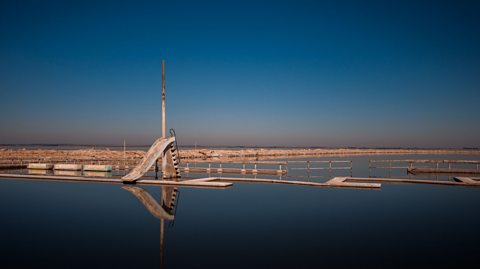
For nearly 25 years, the lakeside resort of Villa Epecuén was hidden beneath the waves, before reemerging in 2009. Founded in 1920 along the shores of Lake Epecuén, the resort drew in tourists who wanted to bathe in its waters, which were said to have healing properties.
The lake would naturally flood and dry out, but from 1980 there was unusually high rainfall for several years and the water level began to rise. An arched wall was built to offer additional protection.
However, a storm in November 1985 caused the lake to overflow, break through the wall and bury the town under 10 metres of corrosive salt water. Since 2009, water levels have been receding, revealing Villa Epecuén to the world once again.
Port Royal, Jamaica
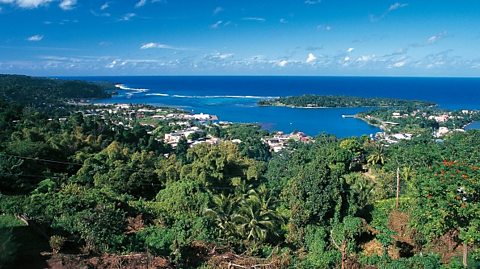
These days, Port Royal is a sleepy fishing village - but at its height in the 17th century, it was known as 'the wickedest city on Earth' thanks to its pirate population.
Port Royal was an important New World trading centre, including during the slave trade. It expanded rapidly.
In 1662, there were 740 recorded inhabitants but by 1692, the number is estimated to have been between 6,500 and 10,000. They lived in brick or timber houses, often up to four storeys high.
At 20 minutes to midday on 7 June 1692, Port Royal was struck by a powerful earthquake, quickly followed by a tsunami.
Approximately two-thirds of the town was plunged below water, starting with the warehouses by the shoreline and then moving inland. It is thought that 2,000 people died that day, with many more injured.
It is possible to scuba dive among the preserved ruins and hundreds of sunken ships, but permission must be sought from the local authorities.
This article was published in December 2021 and updated in July 2026.