The joy of your child’s development is that something small and silly can actually play a big part in their life as they grow up.
Something as simple as making animal noises together can teach your child loads of skills, from understanding new words to coordinating their body. It’s also great for your parent-child bond.
In Hamza Loves Animals, wildlife expert Hamza meets a whole host of exotic creatures in Africa, including lions, elephants and monkeys.
Watch our exclusive film with Hamza to get inspired for your next play time session…
Watch Hamza's wildlife inspo for parents
HAMZA:
Welcome to Kenya, where the animals are not just awesome, they can help your child learn.
Kids love to copy animal noises, roaring like lions…
Trumpeting like elephants…
Or honking like hippos…
It develops their oral motor skills.
Let me and my animal friends show you how you can help your child develop their skills by watching Hamza Loves Animals together.
There are so many different animal noises.
Why not watch an episode of Hamza Loves Animals with your child?
Pause and copy any animal noises you hear.
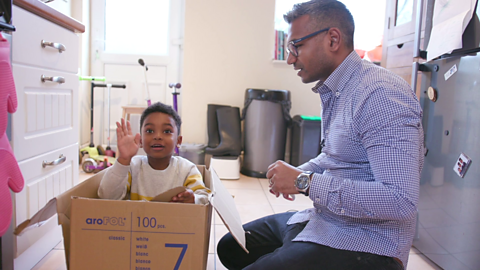
(children make various animal noises)
HAMZA:
Working on contrasts in sounds is a fun way to do this.
(parent and child give an example of imitating a sound)
HAMZA:
I had so much fun copying the sounds my animal friends make myself.
How about watching these clips with your child, and see if they can copy my elephant trumpet?
When children listen to animal noises, they're sharpening their listening skills and noticing the difference between sounds.
Copying animal sounds exercises children's vocal cords and mouth muscles, which can improve how they articulate words.
(children make various animal noises)
Making animal noises also supports early foundation of phonological awareness - the skills children later use for reading and writing.
(child makes 'arrr' sound)
So the next time you hear one of my animal friends trumpet… or roar… join in with your child.
You are helping them grow their voice and confidence.
Watching CBeebies shows together
Watching TV shows together, like Hamza Loves Animals is a great way to start conversations and games with your child.
Just like in the film above, you could pause the show and chat about the different animals you've seen together and what your favourites were.
You could also see who can make the best animal sounds for whatever animal is on screen. You'd be surprised how beneficial this can be for your child's development!
Four skills your child can learn from making animal sounds
1. Pretend play and taking the lead
Making animal noises can just be the start of some serious pretend play!
As well as roaring like a lion, you might start strutting around on all fours like one! Or you could swing and hop like a monkey.
Once you've got started playing, let your child take the lead and choose which animals you'll be. This is great for keeping them engaged and opens up a whole world of conversation and chat to boost their language skills.
2. Turn taking and listening
Playing a game, like taking turns making animal noises, is great for your child's language and social skills.
Understanding that they need to wait for their turn and listen while someone else is having their's reinforces the rules of conversation and sharing.
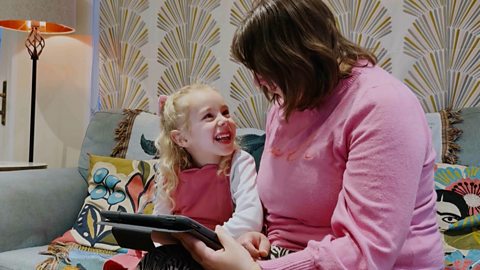
3. Phonological awareness and vocabulary
Making specific noises - the trumpet of an elephant, the ribbet of a frog, the hiss of a snake - can help your child's articulation as they practise different mouth movements. In the film Hamza calls these 'oral motor skills'.
This also helps them to notice the difference between sounds: phonological awareness.
You can help your child link words to the sounds you make and expand their vocabulary. Words like 'roar', 'trumpet', 'hiss', 'loud', 'soft' are a good place to start.
4. Motor skills
It's really tricky to trumpet like an elephant without using your arm as the elephant's trunk.
Just like the families in the film above, you and your child can add actions to your animal noises. Perhaps hopping around like a frog, charging like a rhino, or, indeed, swinging your arm like an elephant's trunk.
Repeating actions can help your child's coordination and motor skills.
And remember to link your actions to new words for that language boost! Swing your trunk. Hop about. Slither like a snake.
It really is that simple! For more everyday inspiration to support your child's development (as well as keep them entertained) take a look at the CBeebies Parenting activities collection.

In case you missed it
Why is imaginative play so great for children?
An article explaining the benefits of imaginative play for children's understanding of the world.