Summary

  • The US is due to sign a deal that will allow Saudi Arabia to develop a civilian nuclear programme - timeline of their talks

  • An announcement is expected from US President Donald Trump's administration, according to CBS News, the BBC's US partner

  • The deal will reportedly allow US companies to run nuclear power for the Saudis on Saudi soil

  • Nuclear experts and former officials in Israel - the US's top ally in the Middle East - have warned that such an agreement could lead to Saudi Arabia being able to develop a nuclear weapon

  • The fear is that if Saudi Arabia starts enriching its own uranium, hardliners in Iran could be encouraged to secretly race to build a bomb, writes our security correspondent

  • The deal, which was first reported by the Wall Street Journal, would last 30 years, the newspaper says

  1. 'Terrible policy': Democratic lawmakers criticise dealpublished at 18:44 BST
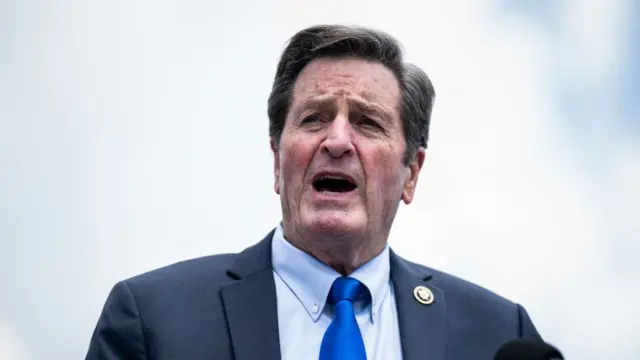
    A file photo of Garamendi speakingImage source, The Washington Post via Getty Images
    Image caption,

    Democrat John Garamendi

    Brad Sherman, Democrat representative from California, says the US should only approve a deal if it has the the "same gold-standard safeguards as our deal with the UAE".

    Under that deal in 2009, the UAE does not produce its own uranium.

    "A President waging war to prevent nuclear proliferation in the Middle East should not facilitate proliferation just because US companies stand to make a profit," Sherman writes on X.

    Republican representative Marlin Stutzman tells CNN that he has no "initial" concerns with the agreement, but would want to "hear more intelligence".

    "You know, the Saudis are really the stable balance in the Middle East", he says, describing Saudi Crown Prince Mohammed bin Salmana a "friend" of the West and America.

    Also speaking to CNN, Democrat John Garamendi describes the deal as "terrible, terrible policy", adding that "we should never, ever do this".

    "Enriched uranium can be made into a nuclear weapon. This is really, really bad, bad policy," he says.


  2. Analysis

    Opponents of Trump's deal are unlikely to defeat itpublished at 18:40 BST

    Sarah Smith
    North America editor

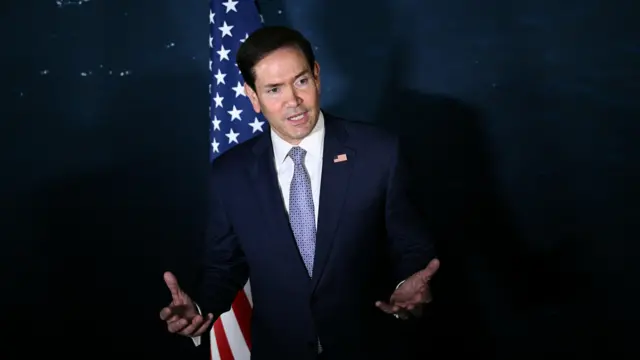
    Marco Rubio is pictured wearing a blue suit with his hands out in frontImage source, Reuters

    The nuclear deal is a commercial agreement for US companies to run nuclear power plants in Saudi Arabia rather than giving the technology to the country.

    A nuclear deal of this kind has been under discussion for years. It was envisaged as part of a wider agreement that would include Saudi diplomatic recognition of Israel.

    But, according to reports, US President Donald Trump has not made that a condition of the deal. Instead, he has reportedly agreed that Saudi Arabia may be allowed to enrich uranium on their own soil, as well as accepting terms that could limit international inspectors from accessing nuclear sites in the country.

    Secretary of State Marco Rubio, on a visit to the Philippines, addressed concerns about the deal.

    "Suffice it to say, the US is not going to reach any agreement with any country in the world that leads to the risk of proliferation," he said.

    A similar deal with the United Arab Emirates, in 2009, was much more restrictive with stringent inspections and no right to produce its own nuclear fuel.

    The highly controversial agreement will need to be debated in congress but opponents are unlikely to be able to gather enough votes to defeat President Trump's initiative.

    Crown Prince Mohammed bin Salman, Saudi Arabia’s de facto leader, has said that he would seek to build nuclear weapons if Iran does so.

  3. A look at which countries have nuclear weaponspublished at 18:36 BST

    The deal set to be announced by the US and Saudi Arabia relates to the generation of nuclear energy - not weapons.

    But as we've been reporting, some opponents of the deal fear it could lead to nuclear proliferation - the spread of nuclear weapons to more countries.

    Currently only nine countries are known to have nuclear weapons. This count includes Israel, which is widely believed to have them, but does not confirm or deny possessing nuclear weapons.

    This Flourish post cannot be displayed in your browser. Please enable Javascript or try a different browser.

  4. Congress should block deal, nuclear nonproliferation expert sayspublished at 18:26 BST

    Lisa Lambert
    Live reporter

    When the first reports of the deal started emerging, a nuclear nonproliferation expert at the national security think tank Foundation for Defense of Democracies warned it would be "bad".

    "Congress should block it," Andrea Stricker, posted on X.

    "If it does not, one hopes the policy will be reversed by a subsequent administration before too much damage is done in terms of watering down safeguards, setting negative precedents for other states, and failing to contain the spread of enrichment and reprocessing—which we just put back in the box in Iran via force," she added.

    Stricker called the 2009 deal with Saudi Arabia's neighbour, the United Arab Emirates - in which the UAE does not produce its own fuel and accepts a host of other restrictions - "the gold standard", and warned that the agreement to be announced would "demolish" that standard.

  5. Analysis

    Some fear this deal could trigger a nuclear arms race in the Middle Eastpublished at 17:59 BST

    Frank Gardner
    Security correspondent

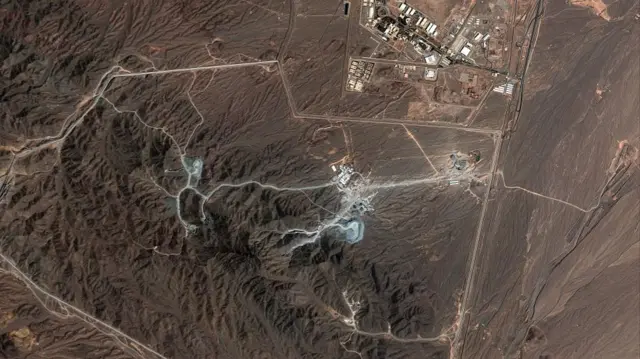
    A satellite image shows the Natanz nuclear facility with brown dirt and some buildingsImage source, Maxar
    Image caption,

    A satellite image shows Iran's Natanz nuclear facility in 2025

    This deal is controversial.

    The reason why the US is doing this is two-fold. It has a commercial interest, because American firms are going to make money out of it.

    But partly it's to keep Saudi Arabia within its strategic sphere of interest.

    The United Arab Emirates got the South Koreans to help them in this area, as well as the US.

    If Washington turned down a Saudi request for help with their civil nuclear programme then the Saudis could turn to the Chinese to help them.

    Saudi Arabia already has a nascent civil nuclear programme, and its big regional rival just across the Gulf is the Islamic Republic of Iran which, as we know, has a very advanced one.

    This deal comes as a war is raging nearby in the Gulf and many countries are saying to Iran, you can't enrich your own uranium or you can't be trusted to.

    The fear is that if Saudi Arabia starts enriching its own uranium, that could just encourage hardliners in Iran to secretly race to build a bomb.

    It could also, potentially, trigger a nuclear arms race in the region with Egypt and Turkey stepping up their own programmes.

  6. Where does Saudi Arabia get its electricity?published at 17:53 BST

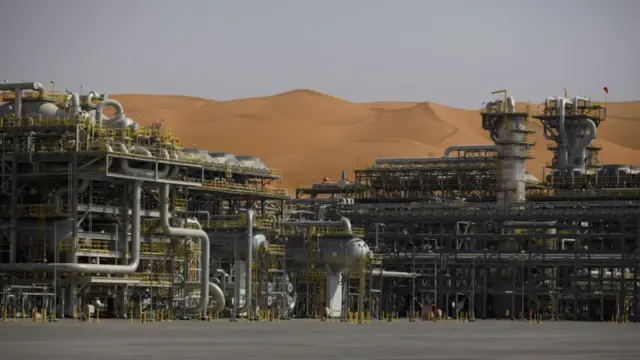
    An industrial site in the desert, largely made up of pipesImage source, Bloomberg via Getty Images
    Image caption,

    The Natural Gas Liquids (NGL) facility in Saudi Aramco's Shaybah oilfield in the Rub' Al-Khali desert

    The deal set to be announced the US and Saudi Arabia will focus on nuclear power generation, according to CBS.

    Saudi Arabia generated an estimated 453 terawatt hours (TWh) of electricity in 2023, with 62% from natural gas, 38% from oil, and less than 1% from renewables, according to data from the US Energy Information Administration (EIA).

    Saudi Arabia currently has no nuclear power plants, but, in September 2023, its energy minister reiterated the country's intentions to build one.

  7. The US has moved closer to Saudi Arabia under Trumppublished at 17:35 BST

    Kwasi Gyamfi Asiedu
    Live reporter

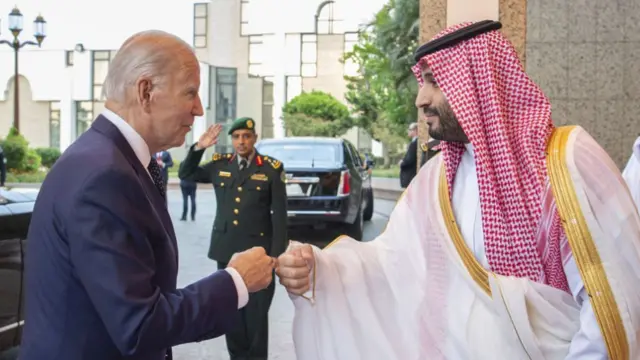
    US President Joe Biden (wearing a blue suit over a white shirt) fist bumps Saudi Crown Prince Mohammned bin Salman who is wearing traditional Saudi clothing.Image source, Handout/Anadolu Agency via Getty Images

    The US-Saudi relationship has undergone radical change in the last few years.

    Four years ago this month, former President Joe Biden gave an awkward fist bump to the Saudi Crown Prince Mohammed bin Salman.

    It came after Biden previously vowed to make the Gulf nation a "pariah" following US intelligence conclusions that the crown prince personally ordered the killing and dismemberment of US-based journalist and critic Jamal Khashoggi in Turkey.

    But as the Russia-Ukraine war sent oil prices soaring, Biden turned to Saudi Arabia, the world's leading oil exporter, to help stabilise oil prices. At a future meeting, the pair shook hands but a warm relationship was slow to materialise.

    Since returning to the White House, President Donald Trump has worked to cultivate a closer relationship. One of his first major foreign trips was to Saudi Arabia in May 2025 - where Saudi companies reportedly pledged $600bn in investment.

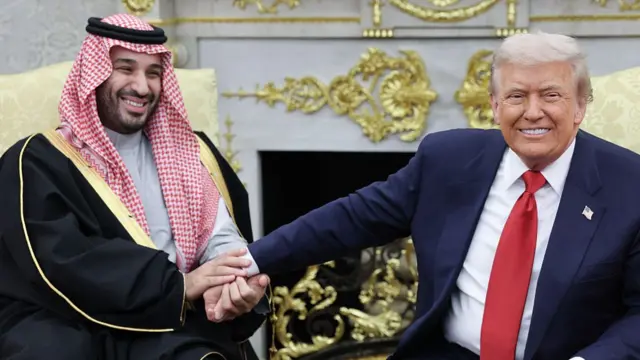
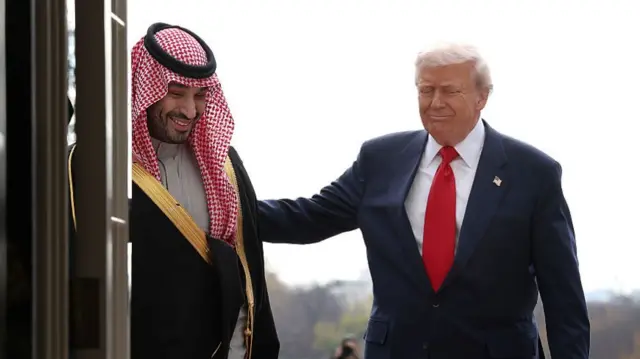
    Last November, Trump warmly welcomed bin Salman to the White House with a personal greeting on a red carpet, a military flyover, and a tour of the presidential mansion. The president also speaks very fondly about Saudi leaders, frequently claiming that King Salman bin Abdulaziz told him the US was "a dead country" under Biden.

    In recent months, Saudi Arabia has found itself in the firing line of Iranain attacks, and its energy exports have been disrupted, after the US launched attacks on Iran.

    U.S. President Donald Trump (R) meets with Crown Prince and Prime Minister Mohammed bin Salman of Saudi Arabia during a bilateral meeting in the Oval Office of the White House.Image source, Getty Images
  8. A brief timeline of US-Saudi Arabia talks on nuclear powerpublished at 17:05 BST

    President Donald Trump (R) welcomes Crown Prince and Prime Minister Mohammed bin Salman of Saudi Arabia during an arrival ceremony at the White House on November 18, 2025Image source, Getty Images

    Talks on the United States and Saudi Arabia co-operating on a civil nuclear programme go back as far as 2008.

    Under the Bush administration, the two countries signed a nonbinding memorandum of understanding (MoU), with the US saying it would assist the Gulf kingdom to develop civilian nuclear energy but that Saudi Arabia has stated it intended to import nuclear fuel and would not pursue "sensitive nuclear technologies".

    Here's some of the key milestones since then:

    • From 2017 to 2019, the US granted seven American companies authorisation to engage in "civil nuclear discussions" with Saudi Arabia
    • However, in 2020 the US Government Accountability Office reported that the two nations had "not made significant progress" due to "persistent differences" over conditions including restrictions on enrichment
    • In 2022, the US and Saudi signed a new MoU on "the exchange of technical information and cooperation in nuclear safety matters"
    • In 2023, the Wall Street Journal reported that the US was considering a US-run uranium enrichment operation within Saudi Arabia
    • In November 2025, the US and Saudi Arabia signed a joint declaration which the Trump administration said "builds the legal foundation for a decades-long, multi-billion-dollar nuclear energy partnership"

  9. Unlike UAE agreement, Saudi Arabia deal may allow it to enrich uranium itself - reportspublished at 16:29 BST

    One of the key points of the deal, according to reports in US media, is that Saudi Arabia may be allowed to enrich uranium itself rather than relying on imported fuel.

    This would reportedly take place at a US-built uranium enrichment facility within Saudi Arabia, and stands out as a key difference compared to the US's nuclear deal with the United Arab Emirates.

    Under this 2009 agreement, the UAE does not produce its own fuel and also faces a number of other restrictions.

  10. US and Saudi Arabia set to announce agreement on nuclear power dealpublished at 16:20 BST

    Washington and Riyadh are set to announce they have reached a deal that would see Saudi Arabia able to develop nuclear power for the first time.

    The two countries have reached a commercial agreement for US companies to run nuclear power plants on Saudi Arabian soil, a regional official familiar with the agreement told the BBC's US partner, CBS News.

    An official announcement is expected later today.

    The deal may allow the Saudis to enrich their own fuel for nuclear reactors, CBS reports.

    The companies involved have not yet been disclosed, but Congress would need to be consulted, according to CBS.

    The BBC has asked the White House for comment.